Less shrinkage due to ethylene-induced ripening. Protect your fruits and vegetables.
Acitvated alumina oxidizes ethylene and helps delay the premature ripening of fruits and vegetables.
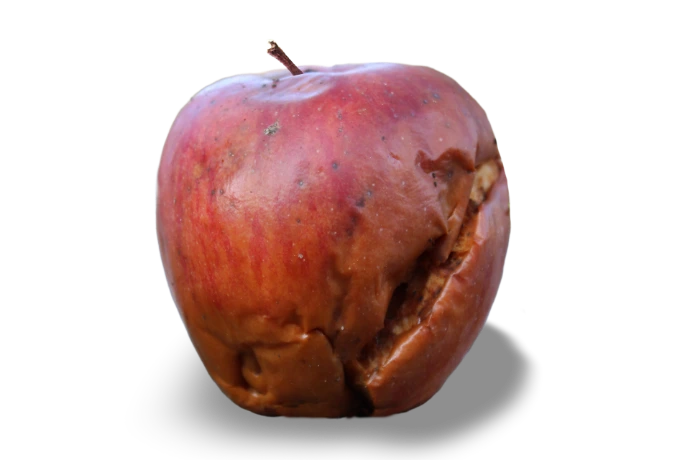
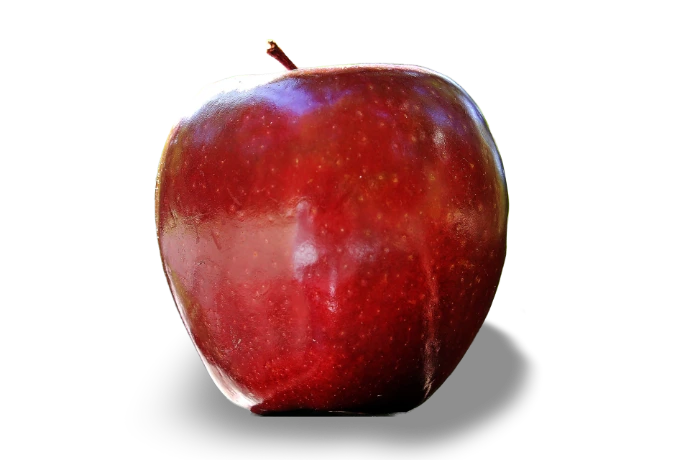
What ethylene does to your goods.
Uncontrolled accumulation
Ethylene is released during the natural ripening process of fruits and vegetables. In sealed packaging, it accumulates and accelerates the ripening of nearby vegetables.
Loss in quality and shrinkage
The consequences are significant losses in quality due to premature ripening and potential losses of corresponding quantities of fruits and vegetables that become overripe and no longer meet quality standards.
Supply chain responsibility
In multi-stage, long-distance supply chains, an accelerated ripening process quickly becomes a major problem that can result in entire batches being rejected. This increases the pressure on you, as a supplier, to guarantee the quality of your goods.
Oxidize ethylene before it`s too late.
When ethylene gasses out uncontrolled you will find yourself in a vicious cycle.
The fruits and vegetables perceive the accumulated gas as a signal to ripen and stimulate each other's ripening in an exponential manner producing more ethylene.
Your goods will be overripe or gone bad by the time they reach the end consumer if you don`t stop the process.
To stop the cycle. you will need to prevent the accumulation of ethylene in your transport or storage containers.
How it works.
1
Ethylene outgassing
Fruits produce ethylene gas while ripening
2
Al₂O₃ & KMnO₄
Activated alumina granules act as carrier for potassium permanganate
3
Ethylene adsorptio
Gaseous molecules penetrate the porous surface of the alumina granules
4
Oxidization
Ethylene chemically reacts with the potassium permanganate and gets neutralized
What`s left:
Ethylene is broken down completely and released into the air as CO₂
The potassium permanganate irreversibly changes to manganese dioxide
The carrier alumina granules remain unaffected
Chemical reaction:
3C₂H₄ + 12KMnO₄ 6CO₂ + 12MnO₂v + 12KOH
Activated alumina as carrier
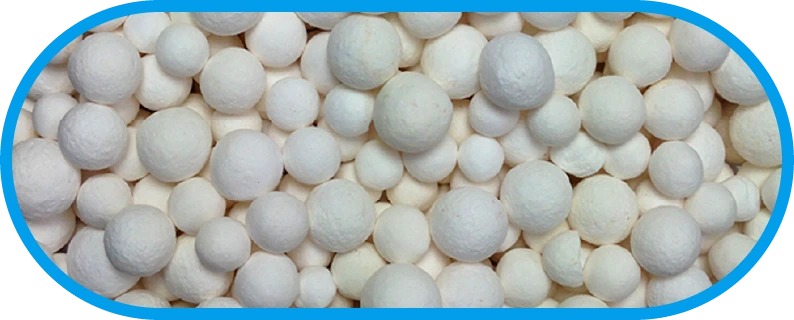
Normally used as a desiccant and adsorbent, it serves as a carrier material in this context.
The granules are mechanically robust and chemically inert, staying in a solid form – not reacting with involved components themselves. With a surface area of nearly 300 m²/g, countless pores form on the spheres surface, to which potassium permanganate can adhere.
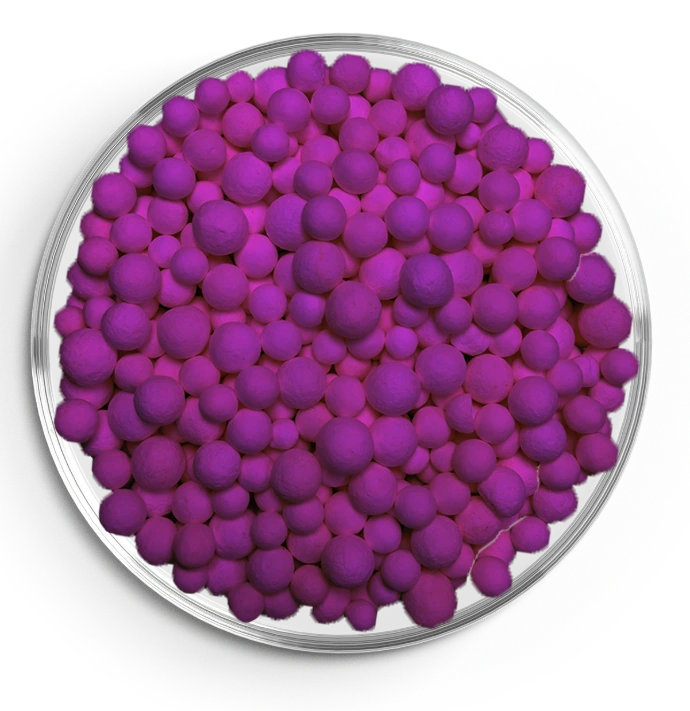
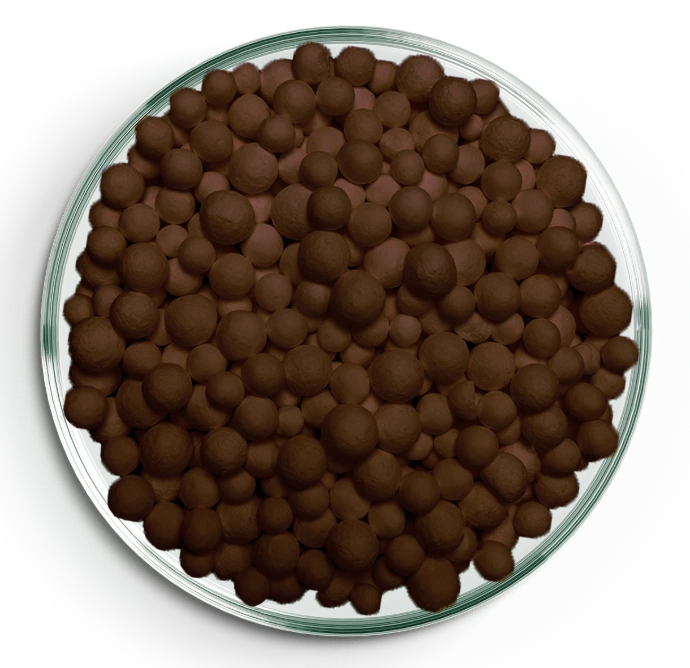
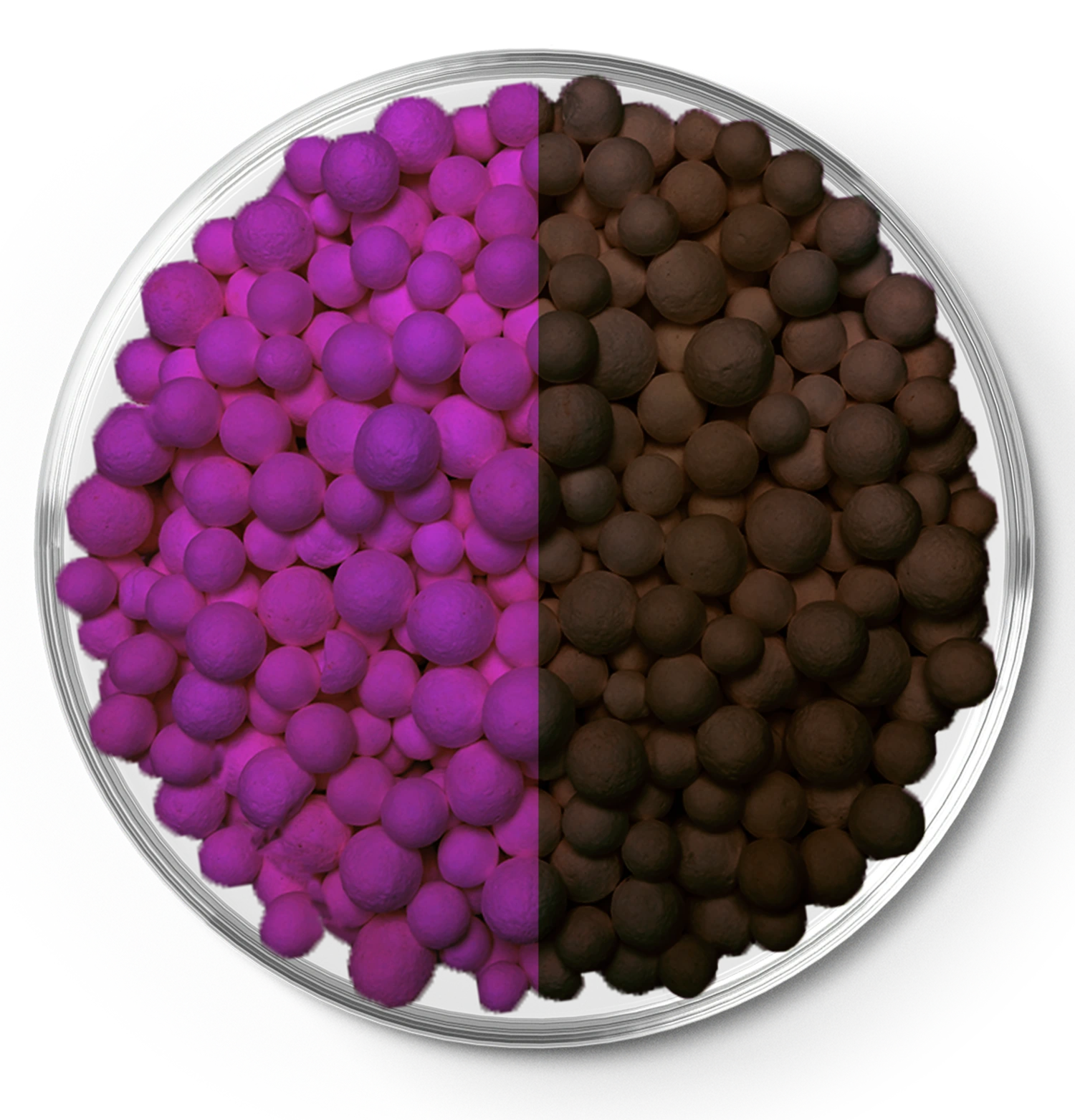
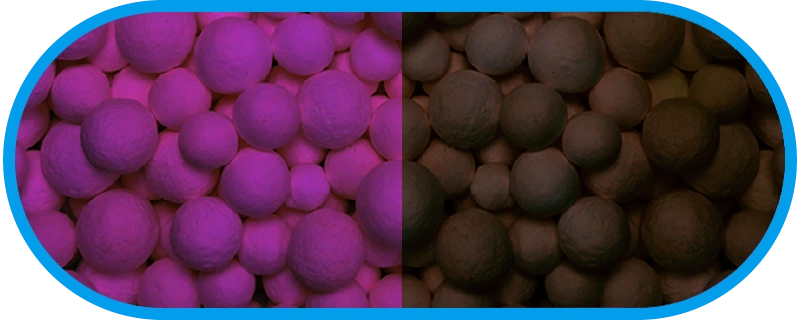
Color indicating when it´s time to change.
Purple:
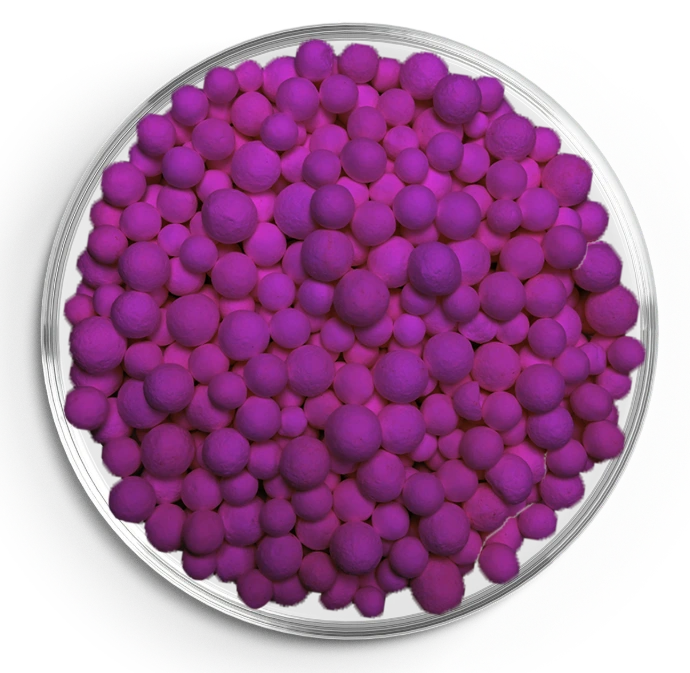
Fresh granules ready to oxidize unwanted substances.
Brown
All the potassium permanganate has already chemically reacted. The granules need to be changed.
Technical product information.
PORESPHERE® Aktiv-AL K8
Activated alumina, impregnated with potassium permanganate
changes color when exhausted
adsorption of ethylene
removes odors
oxidizes pollutants
removal of chlorine and hydrogen sulfide
Composition: 60% Al₂O₃, 8% KMnO₄, 31% H₂O
Bulk density: 0,96 g/ml
Specific surface area: 280 m²/g
Pore volume: 0,4 ml/g
Your achievements:
Stable level of ripeness
Prevent a chain reaction before it starts. Without ethylene buildup, your goods will age much slower and not affect each other.
Lower complaint rate
Fruits and vegetables will be protected against overripeness and mushy spots. You are able to supply high quality products.
Predictable costs and logistics
A controlled ripening process helps ensure systematic planning throughout the entire supply chain, all the way to the end customer.
Conoscete già il prodotto di cui avete bisogno?
Avete bisogno di supporto nella scelta del prodotto o della quantità?
FAQ – your questions, answered.
No, the granules are not reusable. The removal of ehtylene occurs through a chemical reaction (oxidation) in which the involved components are fully converted. The potassium permanganate irreversibly reacts to potassium dioxide.
You can use our PORESPHERE® Aktiv-AL K8 for the removal of ethylene gases from food as long as the granules are safely packaged in satchets. These bags must comply with certain local guidelines and serve as a tear-resistant and waterproof protective barrier that is permeable only to air or gas.
Under no circumstances should potassium permanganate come into direct contact with food. Upon request, we will gladly provide you with required safety data sheets and conformity declarations.