Zeolites used as energy storage.
Store heat in a solid state material. How zeolite-based thermal energy storage works, where it stands and how we supply zeolites from lab batch to pilot scale.
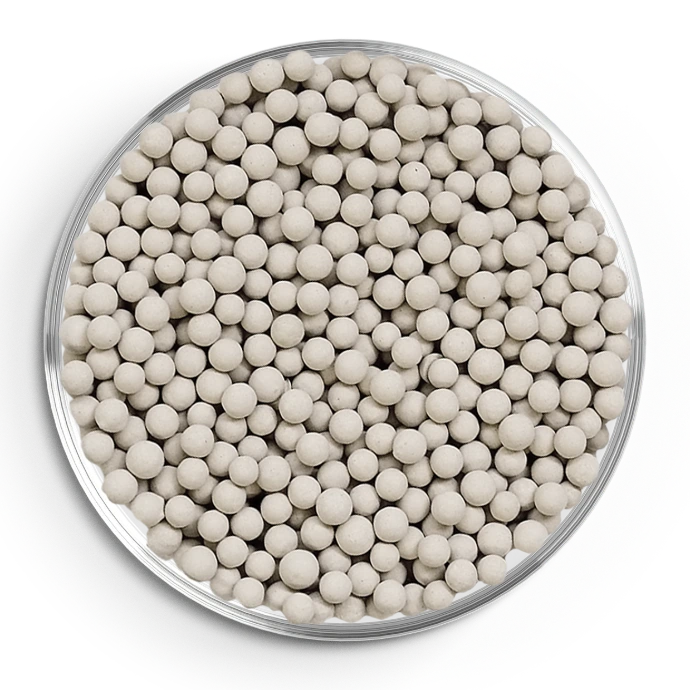
Why zeolites are interesting for energy storage.
Most of our energy goes into heat and a large share of that heat is lost the moment it’s produced. Waste heat from furnaces, biogas engines, incinerators, data centers or other industrial facilities often goes up the chimney because nobody needs it at that moment. Zeolite-based storage can be one way to hold on to it.
Often used as desiccants in industrial drying processes, zeolites (also known as molecular sieves) are highly porous materials that adsorb water molecules. These molecules attach to the internal surfaces of the material – much like tiny magnets – and release heat in the process. For everyone who paid attention in chemistry class: this is an exothermic process.
This heat release during adsorption is the key to using molecular sieves as a basis for thermal energy storage.
How it works.
1
Charge
Zeolites naturally adsorb water. Hot air or steam is used to drive it out of its pores and dry the zeolite. The heat that goes into this “dry state” is then stored as chemical potential.
2
Store
As long as the zeolite stays dry, the potential energy stays in it. No insulation is needed, and there is no self-discharge – even after longer periods of time.
3
Discharge
When heat is needed, water vapour flows through the zeolite. The water binds to it again and the stored heat is released.
Why developers are looking at zeolites.
About three to four times the heat of water per volume, so storage units get much smaller.
Stored heat doesn’t leak away, which makes weeks-to-months storage realistic. This is the main advantage over water tanks and phase-change materials.
Charged containers can move from the waste-heat source to a consumer elsewhere. This has been demonstrated with a waste incineration plant and a mill in Germany.
The same adsorption effect is used for storage, heat pumps and heat-driven cooling.
Where the technology stands.
Zeolite heat storage is real, but early.
Today’s evidence comes from research demonstrators, for example a 150 kWh unit at Fraunhofer IKTS and mobile containers in a German industrial pilot that reached 78% overall efficiency. Seasonal solar storage was tested with Vaillant in the EU project COMTES.
Open questions remain: system cost, heat transfer inside the bed, and cycle stability over thousands of cycles. Which material goes into the reactor is one of the biggest levers on all three.
Still, the potential is huge. As energy demand continues to rise, particularly in energy-intensive facilities such as data centers, thermal energy storage could help capture and reuse waste heat, making industrial processes more energy-efficient
What kind of zeolite is needed?
For storage, a zeolite is judged on different criteria than in conventional adsorption:
Usable water uptake within your actual temperature window
Heat of adsorption per kilogram
Regeneration temperature, which decides which heat source can charge it
Cycle stability under repeated hydration and dehydration
Shape and size (beads, pellets), because pressure drop and heat transfer in the bed depend on them
Mechanical strength, to avoid attrition and dust over many cycles
Binder or binder-free?
Most industrially used zeolites contain binders. They act like glue to hold the crystal structures together when being formed into beads or pellets. In exchange, a small amount of adsorption capacity is given up, since the binders are usually inactive components.
Binder-free zeolites are therefore not as structurally stable but offer enhanced adsorption properties and higher working capacites.
Higher capacity = more energy being stored
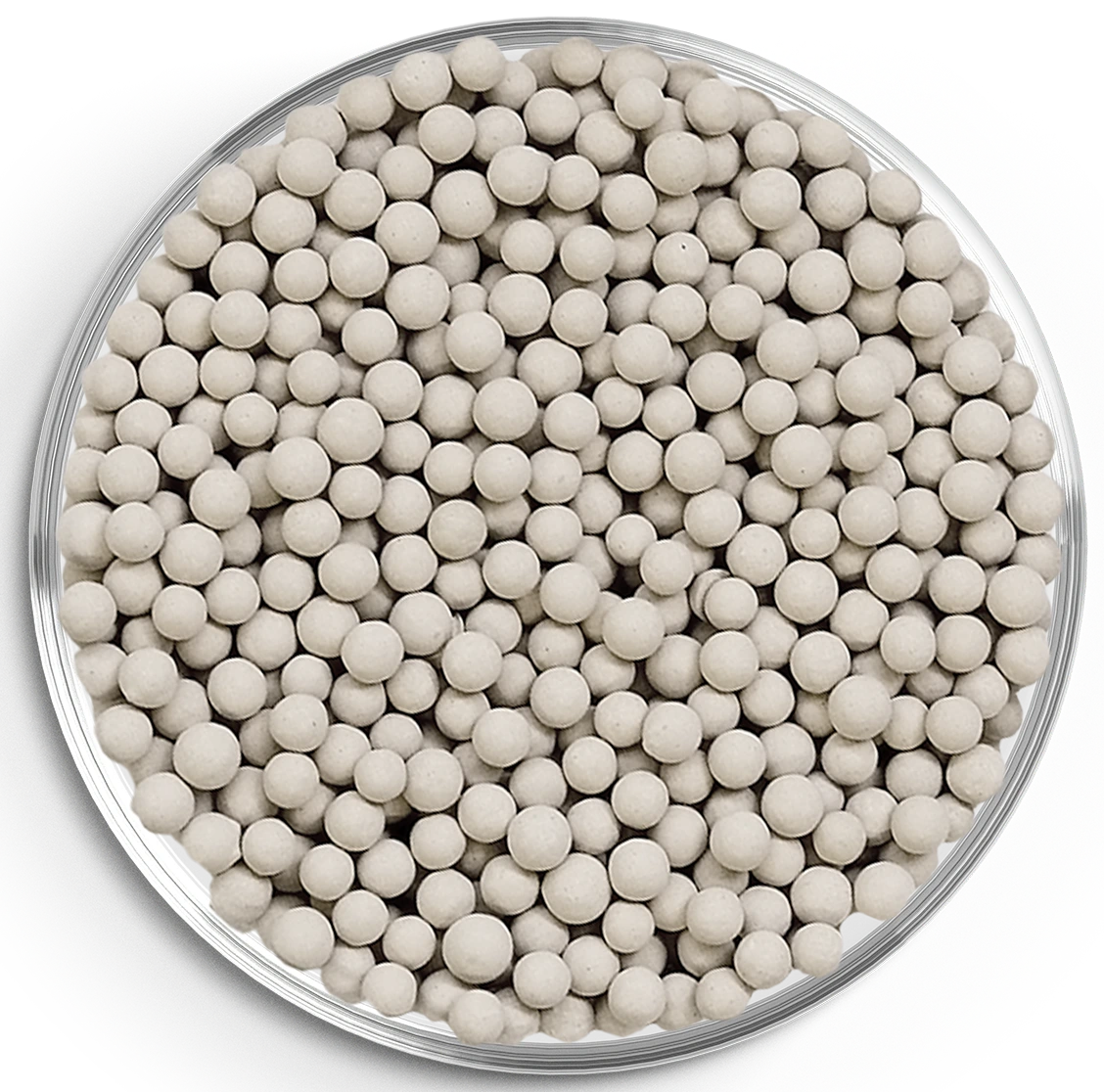
GIEBEL Zeolites.

Already know which product you need?
Need support choosing the right product or quantity?
FAQ - your questions, answered.
Research groups report roughly three to four times as much heat per volume. That means a much smaller storage unit for the same energy. The exact figure depends on the zeolite, the temperatures and the system design.
No, not in the usual sense. The heat is held physically, so a dry zeolite keeps its energy as long as it stays away from moisture. According to studies, these systems are able to store heat over months without any significant loss of baseline efficiency.*
*Fraunhofer Institute, Thermal storage for the energy transition (2021)
It depends on the zeolite and the system. Demonstrators have used waste heat and solar heat, and some projects are working on charging with low-grade heat below 100 °C. Tell us your heat source and we can discuss which zeolite types are worth testing.
It’s not yet at scale. There are working demonstrators being tested but cost, heat transfer in the bed and long-term cycle stability are still being worked on.
Common candidates in published work include 13X and NaY types. The choice depends on your temperature window, cycle count and reactor design. We can supply samples so you can test them on your own rig.