Molecular sieves for granulate drying at the highest level.
Dew points down to -70 °C
No bubble formation or streaks in recycled plastic
Removal of impurities
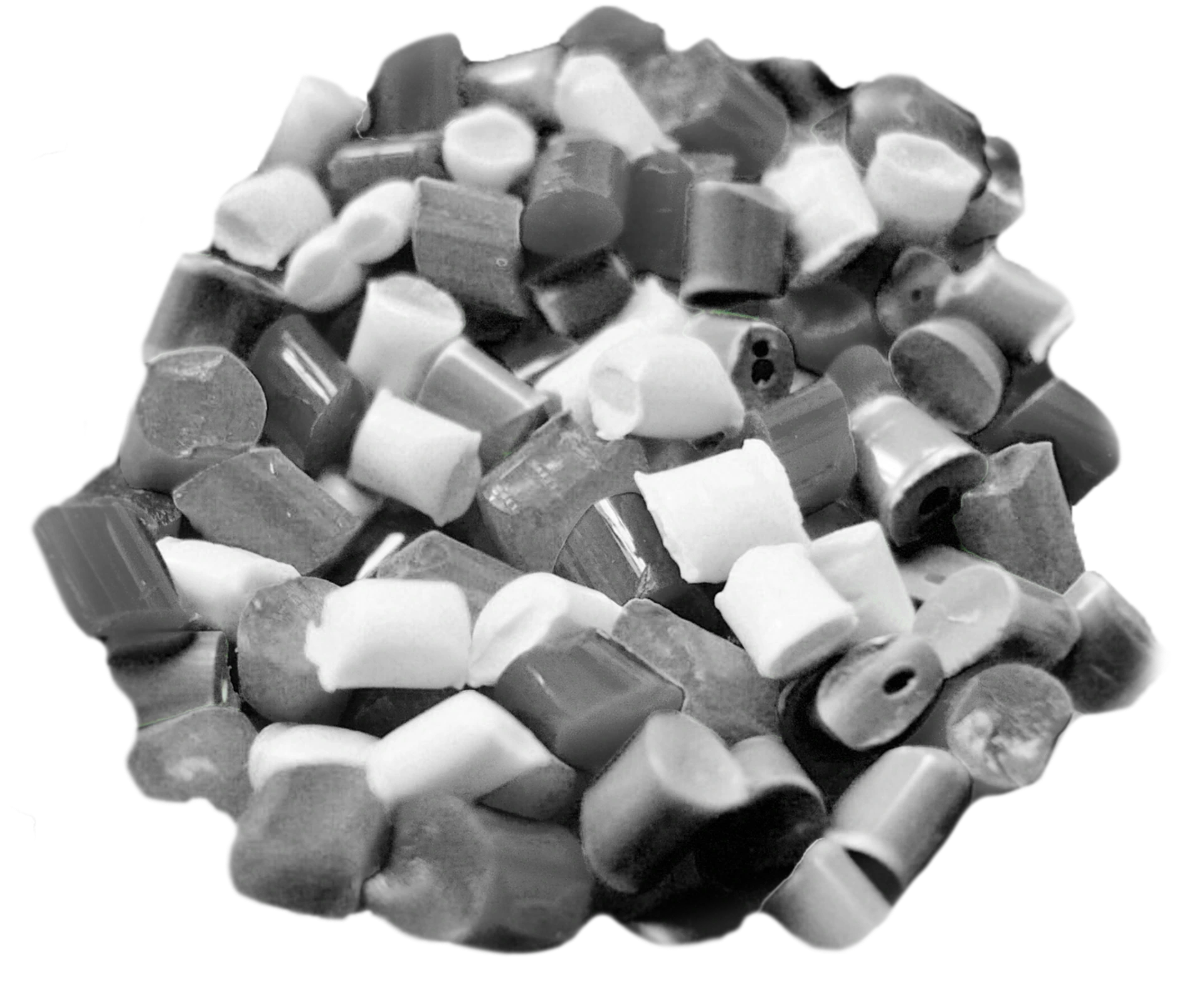
Desiccants for the processing of plastic granules.
Granule dryers are used wherever granulated raw materials must be dried prior to further processing – most commonly in the plastics industry.
Many plastics are highly hygroscopic, meaning they actively absorb moisture from the surrounding air. This becomes a problem when the raw material is heated for processes such as injection molding, extrusion, or blow molding.
If there is too much moisture in the plastic, it vaporizes instantly, leading to serious quality defects, including:
Air bubbles
Streaks (striae)
Stringing
Reduced mechanical strength
When is drying necessary?
Not all plastics are equally hygroscopic, and not every application requires the same degree of dryness.
For moderate requirements, hot-air dryers are typically used.
However, if strict limits for residual moisture must be met, desiccant (dry-air) dryers are the preferred choice. These contain molecular sieve granules that actively extract moisture from the plastic.
PET recycling.
PET falls into the category of "highly hygroscopic" materials. To recycle old plastic bottles, the granulate must undergo an intermediate drying step.
1
Processing
PET bottles are collected, sorted, shredded, and washed. The result is clean flakes, ready for further processing.
2
Regranulation
After a preliminary surface-drying stage, the flakes are melted in an extruder and processed into granulate.
3
Drying
Before the granulate is melted again to manufacture new bottles, its core moisture content must be reduced to the ppm (parts per million) range. This is where molecular sieves come into play.
4
Production
New PET bottles are created from the dry granulate using an injection molding process.
The right molecular sieve.
Molecular sieves are small beads that reveal a very distinct characteristic under a microscope: their entire surface and interior are filled with countless pores.
Through physical interactions, the surfaces of these pores can bind highly polar molecules such as water (H₂O), much like a powerful magnet.
Once bound within these pores, a significant amount of energy is required to release the (water) molecules from the beads.
Thanks to these properties, molecular sieves can remove even trace amounts of residual moisture from their surroundings making them ideal for drying plastic granules.
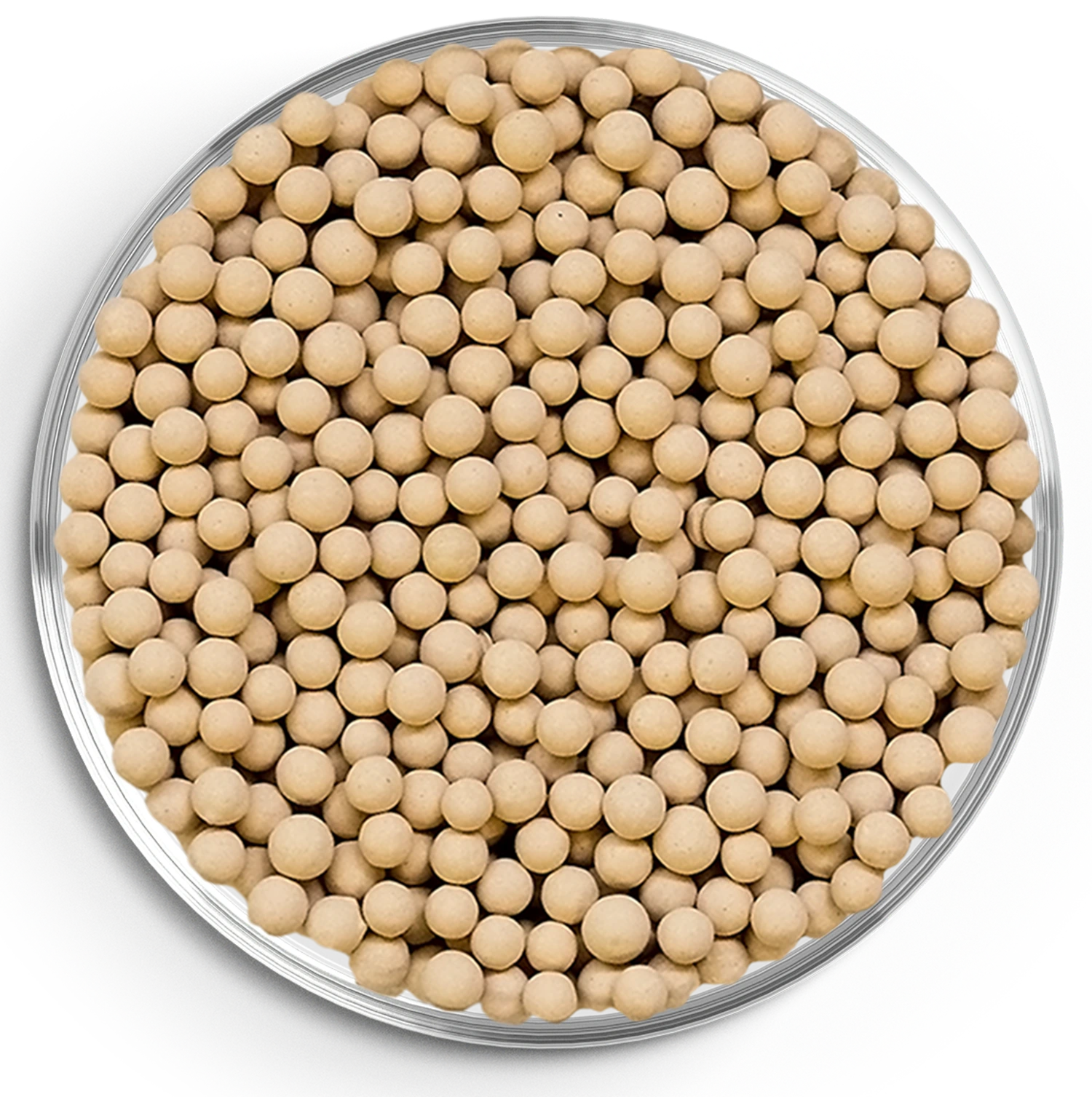
CAGESPHERE® 4A
Molecular Sieve Type 4A
Achieves dew points down to –55 °C
Standard choice for plastic dryers
Reliable all-rounder
High selectivity (adsorbs only H₂O)
Pore size: 4 Å (0,4 nm)
H₂O capacity: max. 23%
Crushing strength: 115 N/piece
CAGESPHERE® 13X
Molecular Sieve Type 13X
Achieves dew points down to –70 °C
Higher moisture absorption (maximum capacity)
Faster moisture uptake
Also adsorbs larger molecules
Pore size: 10 Å (1,0 nm)
H₂O capacity: max. 25%
Crushing strength: ≥ 80 N/Kugel
Is your OEM charging exorbitant prices for desiccants?
Request a comparative quote today.
By switching to CAGESPHERE® molecular sieves, one customer in the plastic granulate drying sector was able to save over €14,000 per year. Now it’s your turn.