Skip to Content
  • ZH EN DE IT
  • desiccants@giebel-group.com
  • 0
    Cart
  • 0
    Wishlist
  • Sign in
  • Silica gels
  • Silica gels - Giebel Poresphere®

  • Overview
  • Learn
  • Compare our products with 
    BASF, Grace, Zeochem, etc.
    What is silica gel, and how does 
    this desiccant work?
    REACH conformity


    VIEW IN SHOPWith color indicator Pure white ( narrow pore) Wide pore Alumina Water-resistant
    READY MADE BAGSSilica gel sachets
  • Molecular sieves

    Molecular sieveS - Giebel CagespherE®

    Overview

    Learn

    Compare our products with
    BASF, Grace, Zeochem, etc.
    Selective adsorption - Overview table What is a molecular sieve and how 
    does it work?
    Fine & coarse grains – when should I 
    use which?

    VIEW IN SHOP Type 3AType 4AType 5AType 13XBinder-free


  • READY MADE BAGS Molecular sieve sachets


  • Aluminium oxides

    Activated Aluminium oxideS - GIEBEL PorespherE®

    Overview

    LeArn

    What is activated aluminum oxide and 
    how does the desiccant work?
    Adsorption spectrum – Overview table

    VIEW IN SHOP

    Aktiv-AL Aktiv-AL K8 Aktiv-AL Powder
  • Learn
  • TECHN. BACKGROUND INFO

  • Silica gelsMolecular sieves Activated aluminum oxides How desiccants work What are adsorbents? Grain sizes Disposal
  • APPLICATION EXAMPLES

  • OverviewAdsorption dryersBreathing air compressors Biogas drying Biomethane (CO₂ & O₂ Separation) Ethanol drying Insulating oil in transformersPlastic granules drying (PET)Air Separation Units (ASU) Water-resistant silica gel
GIEBEL Desiccants
  • Buy online
GIEBEL Desiccants
  • 0
  • 0
    • Silica gels
    • Molecular sieves
    • Aluminium oxides
    • Learn
  • desiccants@giebel-group.com
  • ZH EN DE IT
  • Sign in
  • Buy online


The right grain size for every process.

1.6–2.5 mm or 3.0–5.0 mm? Find out how to select the right grain size for your application. Whether small or large beads, both affect the granule's adsorption properties.

Request consultation 

Molecular sieves in coarse 3-5mm grain size
Molecular sieves in fine 0,5-0,9mm  grain size
Molecular sieves in regular 1.6-2.5mm grain size
Molecular sieves in fine 0,5-0,9mm  grain size Molecular sieves in regular 1.6-2.5mm grain size Molecular sieves in coarse 3-5mm grain size

How does particle size affect adsorption properties?

Adsorption rate

= Diffusion paths


The smaller the spheres, the shorter the path to the interior of the pores – and the faster the molecules bind.

Conversely, with larger spheres, longer distances must be traversed, which slows down adsorption.

Resistance

= Pressure loss in the system


The smaller the spheres, the more closely packed they are and the higher the pressure loss in the entire system.

The larger the spheres, the more interstitial spaces there are, allowing for better flow.

Crush strength

= mechanical stability


The smaller the beads, the more fragile they are. The risk of dust formation, irregularities, and filter blockages increases.

The larger the beads, the more stable they are and the better suited they are for demanding processes.

Fine and coarse grain sizes.

Adsorption rate = How quickly molecules are taken up.

Pressure drop = The use of granules in gas and liquid streams creates a certain amount of back pressure.

Mechanical stability = Resistance to pressure, abrasion, or vibration.

Property

Fine grain size

Coarse grain size

Adsorption rate

Fast

Moderate

Pressure drop

Hihg

Low

Mechanical stability

Moderate

High

The right granule form.


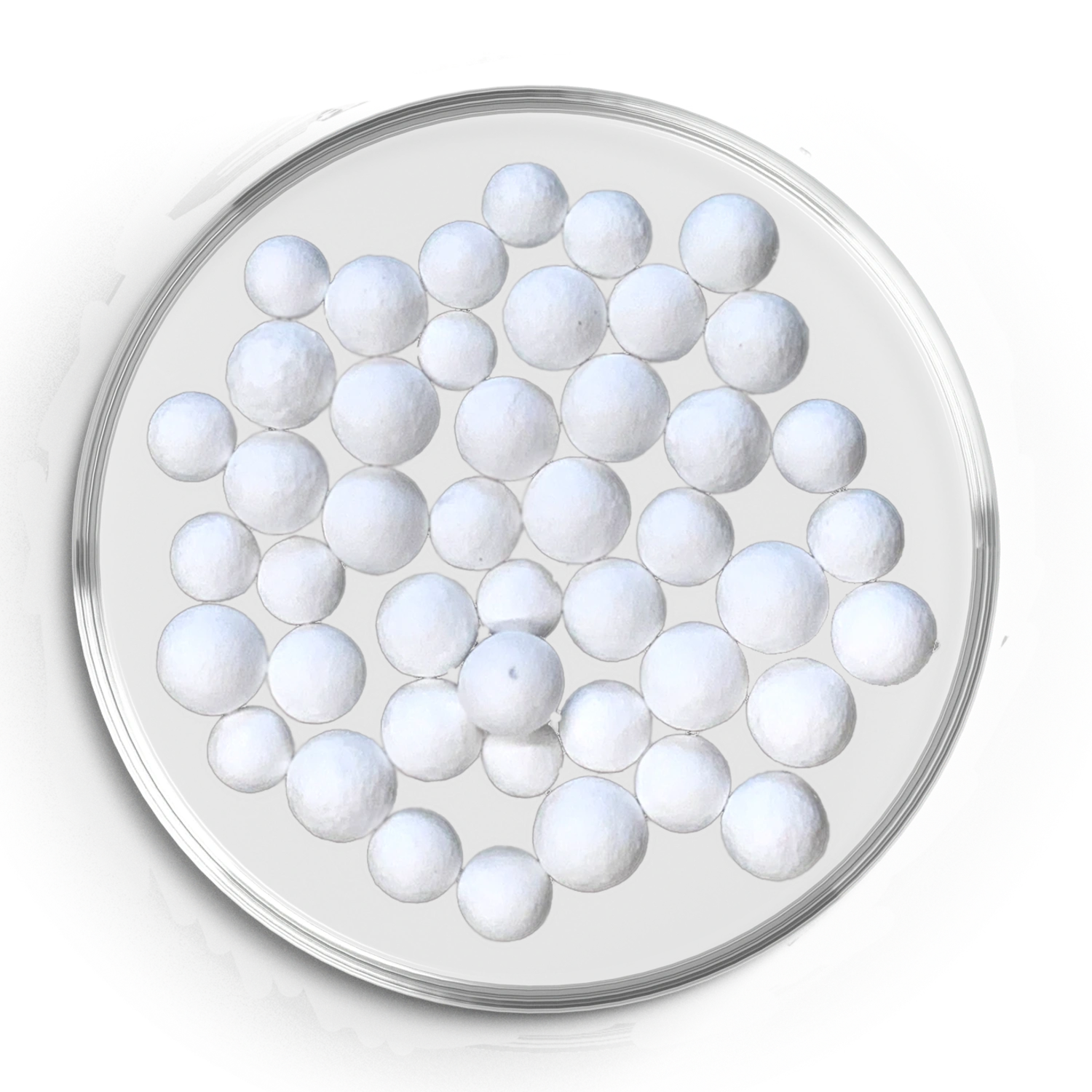
Beads

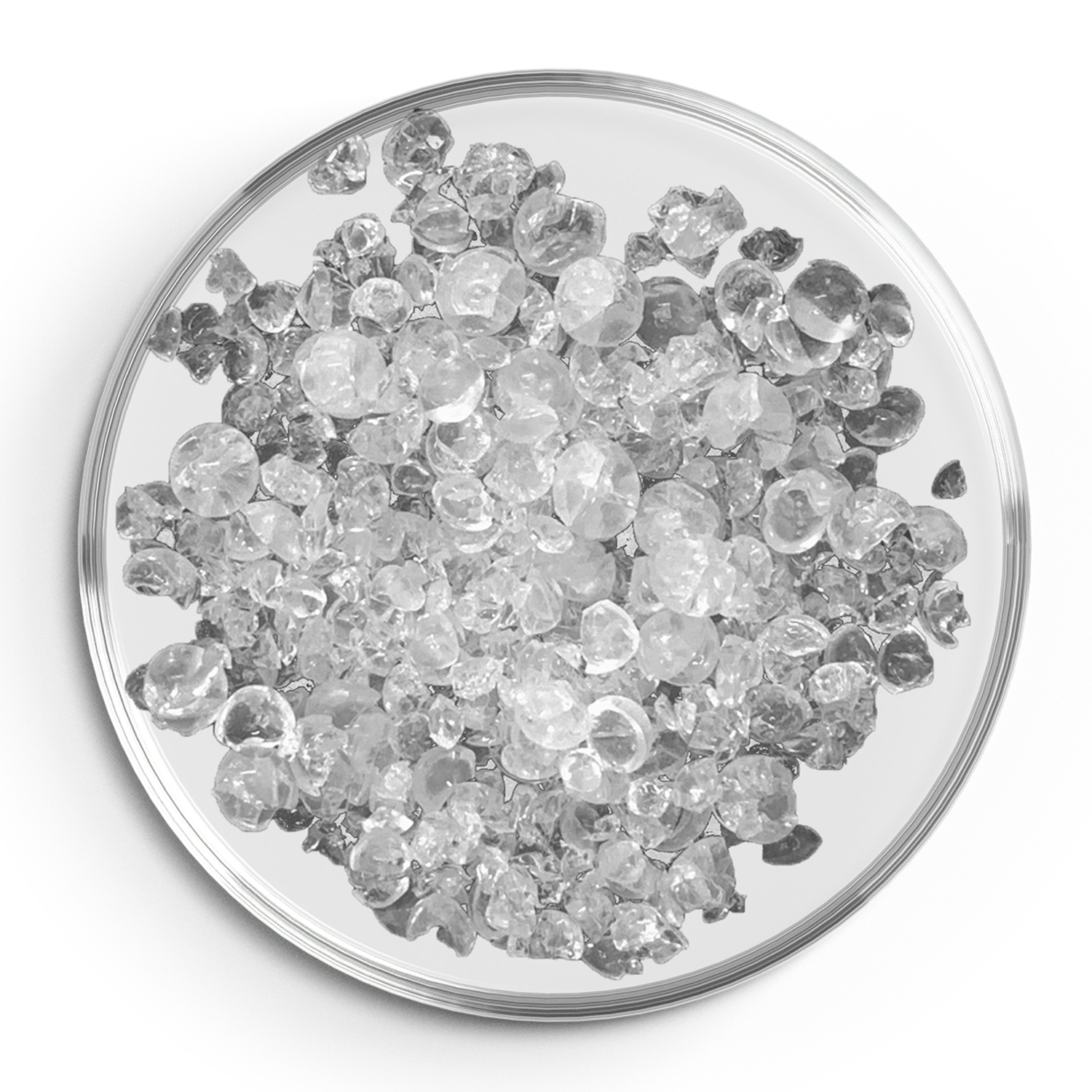
Broken beads

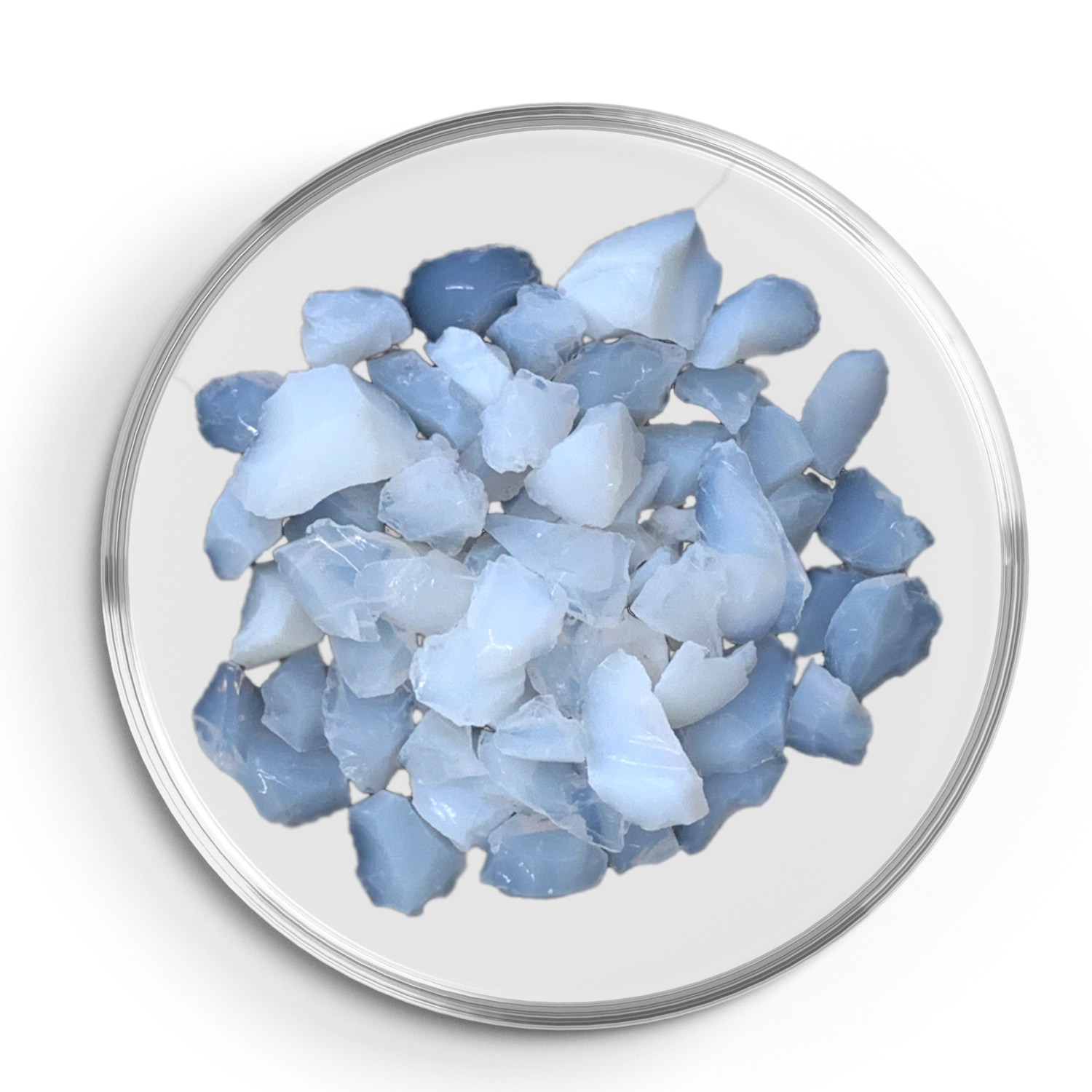
Crystals

Attrition

Low

Moderate

High

Pressure loss

Low

Moderate

High

Price

Moderate

Low

Low

Application

Dynamic adsorption

Static adsorption

Static adsorption


Spherical white silica gel beads in petri dish

white silica gel broken beads in petri dish

white silica gel crystals in petri dish

Smooth spherical shape
Offers high mechanical stability and uniform bed packing. This is important for dynamic processes involving airflow, gas streams, movement, vibrations, etc..
The spherical shape ensures minimal bead abrasion and prevents filters from becoming clogged by dust formation.

Broken Beads
Used in static applications, such as desiccant bags for dehumidification.
In dynamic processes, they tend to generate dust and cause blockages.

Crystals
Also used in static applications for dehumidification – often in desiccant bags.
In dynamic processes, they tend to generate dust and cause blockages.

Already know which product you need?

Order directly online

Need support choosing the right product or quantity?

desiccants@giebel-group.com 

GIEBEL Group GmbH
Carl-Zeiss Str. 5
74626 Bretzfeld 
Germany​

Imprint
Privacy Policy
Terms & Conditions
Company
Jobs

References
Contact
Special solutions
REACH

desiccants@giebel-group.com

GIEBEL Desiccants Logo

© 2026 GIEBEL Group - All rights reserved.

Protecting your privacy is our priority.

Allow the use of cookies from this website in this browser?

We use cookies to enhance your experience on this website. Learn more about our cookies and how we use them in our Cookie Policy.

Allow all cookies
Allow only essential cookies