Moisture damages transformers – effective desiccants protect your insulating oil.
Maintenance of dielectric strength
Longer service life of the insulating oil
Lower operating costs and reduced risk of failure
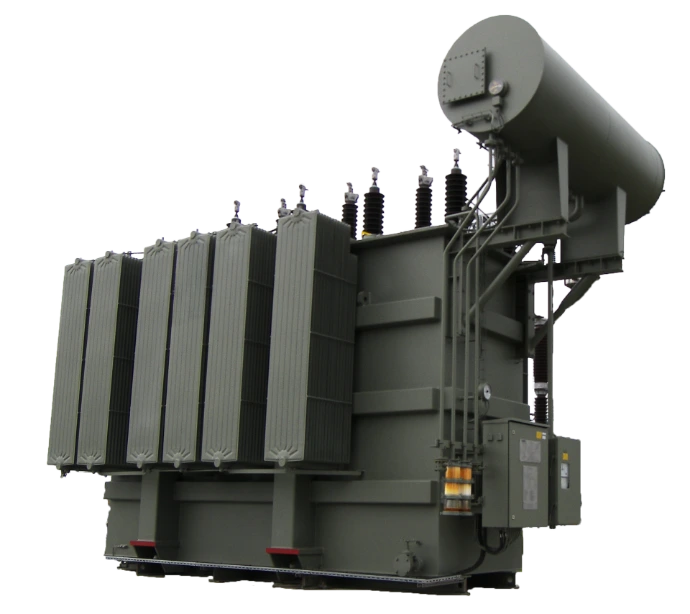
Why moisture is one of the most dangerous hazards for transformers.
Natural fluctuations in temperature and pressure occur in every oil-cooled transformer.
As the oil expands and contracts during operation, air flows into and out of the system through the breathing mechanism. This outside air almost always contains a certain amount of moisture.
If this moisture enters the insulating oil, it alters its physical properties: The dielectric strength decreases, the aging process is accelerated, and corrosion and deposits form on key components.
The danger is that these changes often go unnoticed for a long time. The transformer appears to be operating stably, while inside, damage is already developing gradually, shortening its service life and increasing the risk of failure.

The consequences of moisture in insulating oil and why every percent counts.
Reduced oil life
Risk of blisters forming
Reduced dielectric strength
Aging of the solid insulation
The effects of water in insulating oil increase not linearly, but exponentially.
Even minimal increases in moisture content can have a significant impact:
Biodegradable solid insulation materials, such as pressboard, are particularly sensitive. They lose their strength much more rapidly and, in extreme cases, can lead to the formation of gas-filled bubbles capable of triggering dangerous electric arcs during peak loads.
At the same time, the performance reserve of the insulating oil drops, reducing the operational safety margin. Consequently, what appears to be minor material damage turns into a serious operational risk—one that is often detected too late and entails high costs.
The most effective measure: keep it dry before moisture penetrates.
Preventive air drying is the key measure for avoiding these risks.
The use of a desiccant prevents moisture from entering the system and coming into contact with the insulating oil in the first place.
Before entering the transformer, the intake air passes through an adsorption system that reliably binds water molecules.
The advantage: No system intervention is required, meaning there is no equipment downtime. The transformer remains fully operational and protected.
This method has been technically established for decades, with one material in particular becoming the standard: silica gel.
Thanks to its enormous internal surface area and chemical stability, it is now the industry standard for drying transformer intake air.
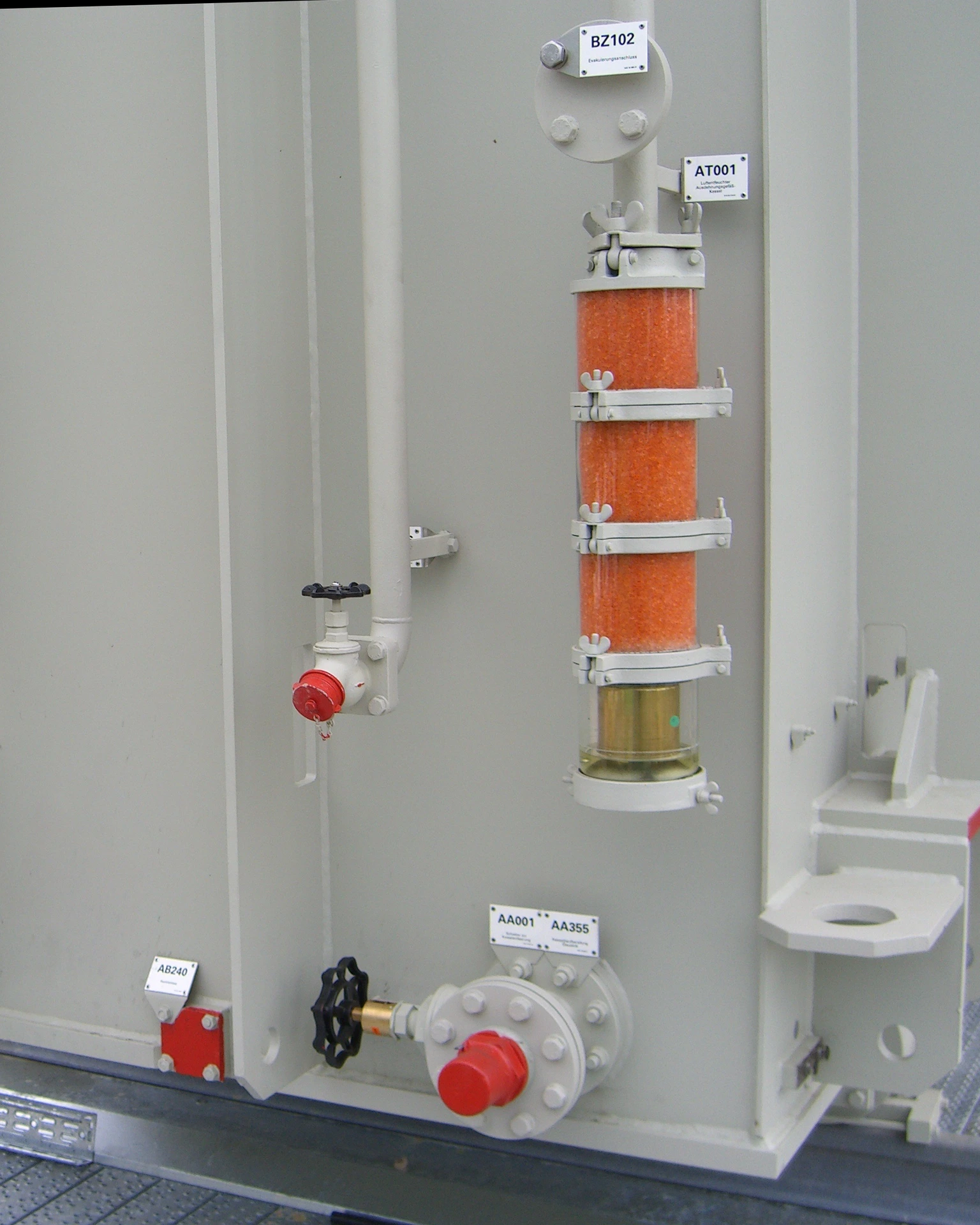

How silica gel absorbs moisture and protects your insulating oil.
Silica gel features a microporous structure with an extremely large internal surface area.
The resulting pores physically attract water molecules and bind them permanently. This process is known as adsorption.
This allows the air drawn into the transformer to be dried during every pressure equalization. Since there is no direct contact between the silica gel and the oil, the chemical purity of the insulating oil remains fully intact.
Another advantage: the material’s characteristic color change during saturation makes it easy to visually check the condition of the desiccant beads at any time. This enables scheduled maintenance and reduces the risk of undetected performance degradation.
Why conventional desiccant beads can lead to damage.
Conventional silica gel is typically used with a grain size of 2.0–5.0 mm. While this works as an industry standard in theory, it quickly becomes a maintenance issue in practice.
Constant vibrations from the transformer can cause the finer desiccant beads to settle at the bottom, where they migrate into the filter area. There, they accumulate, restricting airflow or even blocking it completely.
The result is significantly impaired air permeability; the desiccant can no longer absorb sufficient moisture, and its protective effectiveness diminishes.
A particularly critical issue is that this drop in performance often goes unnoticed by the system operator until it is too late. In the worst-case scenario, the very system intended to provide protection becomes an unexpected risk.
PORESPHERE® silica gel – engineered to effectively block moisture.
PORESPHERE® silica gel is ideally suited for the demanding conditions found in transformers. With a precisely defined particle size of 3.0–5.0 mm, it contains no fines that could settle due to vibration and block filter areas. This ensures stable airflow throughout the service life and maintains consistently high adsorption performance.
The result:
Moisture is reliably captured
Components remain protected
Operational reliability of the system is significantly enhanced
Utility companies, transformer manufacturers, and maintenance providers rely on our PORESPHERE® Type A with color indicator because it represents a precise technical improvement that makes a measurable difference in day-to-day operations.
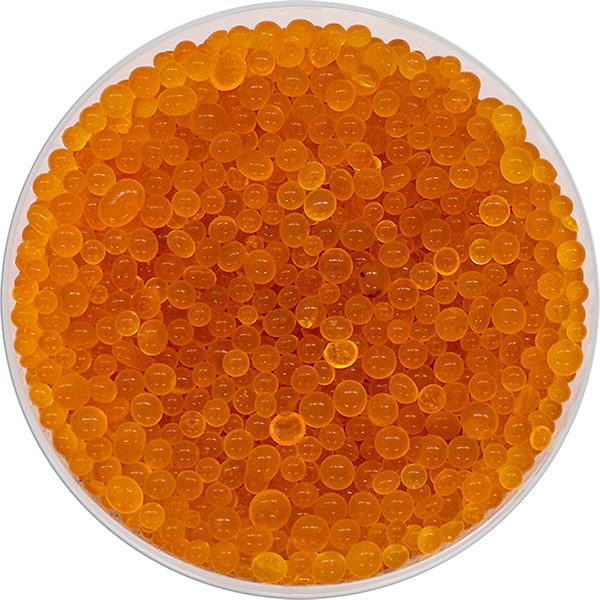
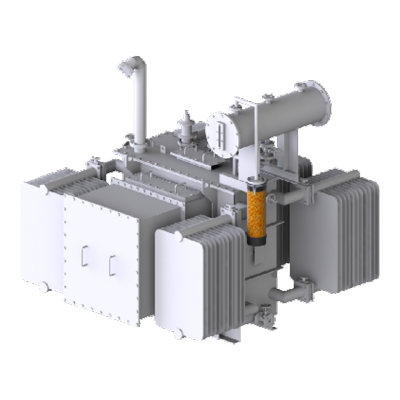
For maximum operational reliability under all climatic conditions.
PORESPHERE® silica gel is suitable for all oil-cooled transformers requiring intake air drying—ranging from conventional grid transformers and wind or solar installations to industrial power distribution systems.
The material retains its dimensional stability and functional reliability even under conditions of rapid temperature fluctuation, high loads, or continuous vibration. It thus plays a crucial role in extending the service life of the entire system.
Available variants and delivery forms
We supply exactly the quantities you need – from small volumes for individual transformer filling, available in convenient 1 kg bags, to larger quantities for series production, supplied in 150 kg drums.
If required, we are also happy to support you in integrating our solution into your existing plant concepts. This enables us to provide a solution that is optimally tailored to your operational requirements – both technically and economically.
Color Change: Orange to Green
Color Transition: 10–20% loading
Ideal for: Strong visual contrast, preventive maintenance
Color Change: Orange → Colorless
Color Transition: At 20–25% loading
Ideal for: Extended service intervals
Silica gel for transformers – available in large quantities
Do you need silica gel for a single installation, multiple transformers, or regular series filling?
GIEBEL supplies PORESPHERE® silica gel in various grain sizes and packaging formats – from smaller quantities to bulk containers. Our solutions are designed for industrial customers, transformer manufacturers, energy utilities, and maintenance companies.
Benefit from customized quantities, competitive offers, and expert technical advice tailored to your requirements.
Already know which product you need?
Need support choosing the right product or quantity?
FAQ - your questions, answered.
Moisture
can reduce the dielectric strength of transformer oil and accelerate the ageing
of both the oil and paper insulation. A desiccant in the transformer breather
helps reduce moisture ingress at the point where ambient air enters the system.
Oil treatment can reduce moisture that is already present in the oil, but it does not prevent moisture from entering the system again. For transformers with a breathing system, it is therefore beneficial to dry the incoming ambient air before it reaches the transformer.
Silica gel has a highly porous structure with a very large internal surface area. Water molecules are adsorbed onto this surface. As ambient air passes through the transformer breather, the silica gel removes moisture from the air before it enters the transformer.
No. Desiccants can differ significantly in terms of particle size, adsorption capacity and mechanical properties. The specific requirements of the transformer breather and the operating conditions should therefore be considered when selecting the appropriate material.
Yes. GIEBEL supplies silica gel for individual applications as well as larger quantities and series production. For bulk orders, we can provide individual quotations and support you in selecting the appropriate product and supply solution.