Moisture destroys precision – dry filaments ensure reliable results.
No failed prints, no stringing, no under-extrusion
High-quality and precise printing results
Reliable protection for valuable filaments
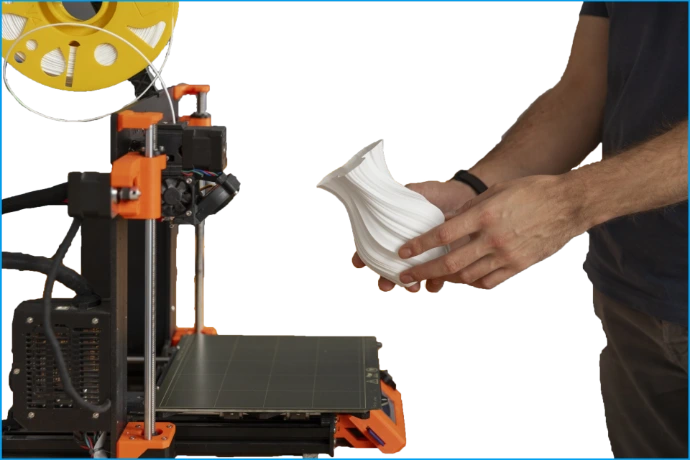
Moisture destroys filaments and consequently your 3D printing results.
Moisture is one of the greatest threats to quality in 3D printing, yet it is also one of the most frequently underestimated. Many plastics, especially TPU, PETG, and nylon absorb water from the ambient air. If this water enters the extruder during the printing process, it vaporizes instantly.
The consequences:
Bubble formation and porosity within the plastic.
Stringing, uneven layers, and dimensional inaccuracies caused by uncontrolled extrusion.
Weak layer adhesion and reduced mechanical strength.
Increased likelihood of defective parts or the need for post-processing.
In short: prints that fail to meet quality requirements, both visually and functionally.
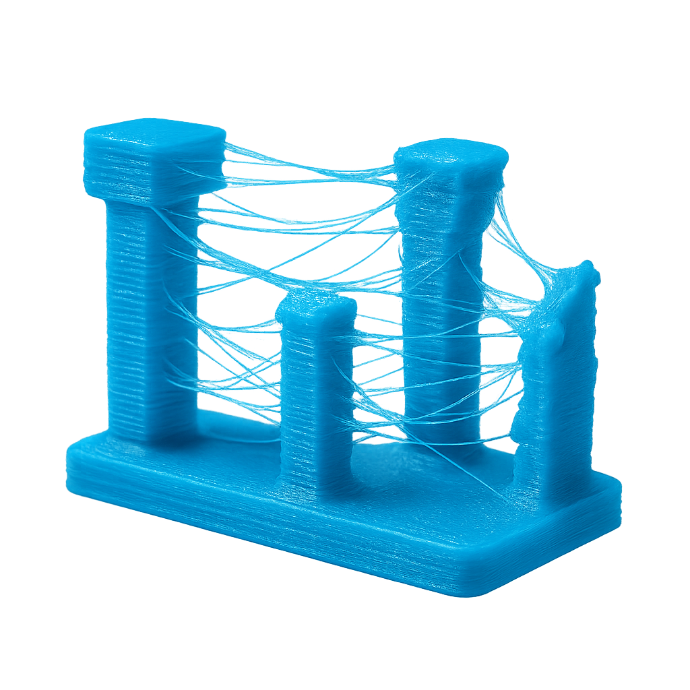
Filaments actively attract moisture.
Even standard ambient air is enough to reach critical moisture levels within just a few hours, as plastic filaments are hygroscopic.
They actively draw water from the surrounding air and incorporate it into their molecular structure. In production and workshop environments, in particular, humidity levels often fluctuate significantly, causing filaments to become damp very quickly.
Moisture is always present, even when invisible. It reliably finds its way into the material, where it causes long-term damage.
Dry filaments = consistent quality.
Only a dry filament can fully realize its material properties. Through controlled moisture reduction, layer adhesion, dimensional accuracy, and surface quality remain at a consistently high level.
Components become more stable, and results become predictably reproducible – a crucial factor for industrial applications and series production.
Effective moisture management during storage and the printing process is therefore a key component for ensuring reliable quality in 3D printing.
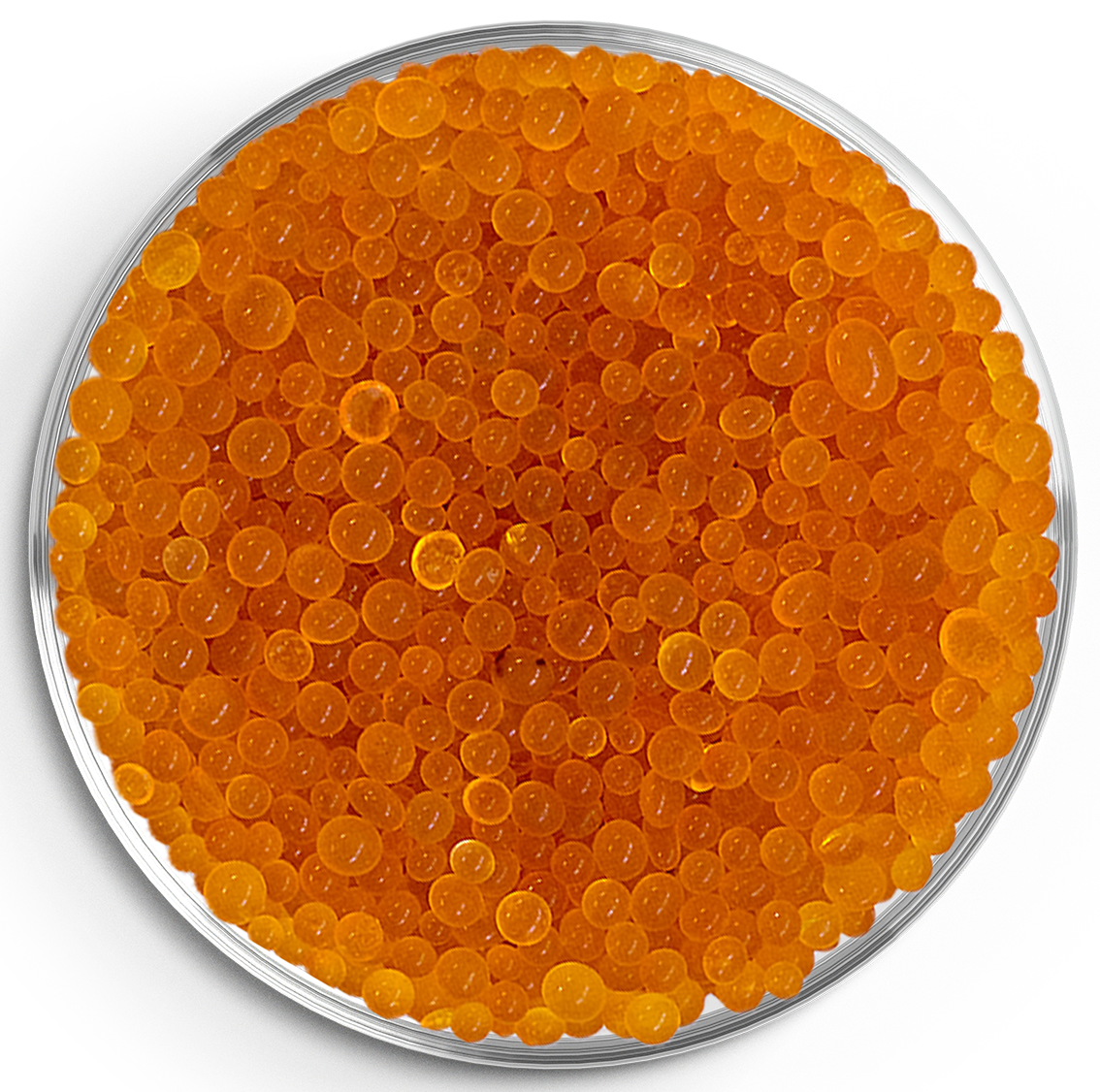
Silica gel protects filaments during storage and use.
An effective and economical solution is the use of desiccant beads, such as silica gel, for long-term moisture control.
It binds water molecules, preventing moisture from entering the filament in the first place. This ensures the material remains dry, both during extended periods of storage and throughout the printing process.
Silica gel is ready for immediate use; once saturated, it can be reused multiple times by gently heating it in an oven (a process known as regeneration). This makes it ideal for use in filament drying boxes, vacuum containers, or storage bins.
How silica gel protects your filament.
These desiccant beads possess an exceptionally large internal surface area, characterized by fine, microporous structures. Water molecules are physically attracted to and trapped within these pores – a process known as adsorption.
Orange silica gel offers a key advantage: an integrated color indicator provides a constant visual update on its saturation level. As long as the beads remain orange, they are actively absorbing moisture. If they change color to green or begin to fade, it is a clear sign that they need to be replaced or regenerated.
This allows you to monitor their effectiveness at a glance. It prevents your filament from becoming damp in the first place, ensuring reliable 3D printing processes without the need for additional measuring equipment.

Already know which product you need?
Need support choosing the right product or quantity?
FAQ - your questions, answered.
Typical signs include bubble formation, crackling sounds in the extruder, matte or rough surfaces, stringing, poor layer adhesion, and unexplained dimensional deviations. Brittle, fragile parts are also a clear warning sign.
No. While silica gel prevents further moisture absorption, it cannot extract moisture from the filament. Wet filaments require active drying—for example, in a filament dryer. Once that step is complete, silica gel keeps the filament dry over the long term.
The duration depends on the moisture level and how often the storage container is opened, as fresh air – and thus new moisture – enters each time it is opened. However, a color indicator allows you to reliably determine when the desiccant needs to be replaced. In cases of heavy use, it can be regenerated multiple times by heating.