Adsorbents in biomethane production.
Upgrading biogas to biomethane by removing CO₂ and O₂. This allows you to achieve a high methane content, reaching natural gas quality.

This is how biomethane gas is produced.
1
Biomass as feedstock
It undergoes fermentation, releasing a gas mixture.
2
Gas drying
H₂O is removed via condensation or desiccant agents.
3
Iron hydroxide & activated carbon
These bind hydrogen sulfide and unwanted residues.
4
Biogas
This produces biogas, which can be used, for example, in combined heat and power (CHP) plants.
5
Adsorption using molecular sieves
CO₂ and O₂ are further removed from the biogas.
6
Biomethane
The refining process yields pure biomethane.
5. Adsorption – the critical step
To be fed into the public energy grid, biogas must meet the same quality requirements as natural gas. This is the only way to guarantee the combustion properties necessary for energy generation.
Iron hydroxide and activated carbon are insufficient for this purpose, as they do not remove CO₂ or O₂.
CO₂ is non-combustible and reduces both the calorific value and the Wobbe index of the gas. O₂ can cause corrosion in pipelines and equipment.
Use of our adsorbents
CAGESPHERE® Molecular Sieve: Effectively adsorbs CO₂ and O₂ from biogas. This ensures that the standards for methane (CH₄) content are met—exceeding the requirements of the standard biogas specification.
The right adsorbents for every requirement.
As a wholesaler of industrial adsorbents and desiccants, we supply the exact materials used in your biomethane gas plant.

Main Layer – CO₂, O₂, and N₂ Adsorbent
CAGESPHERE® 13X
Zeolite-based molecular sieve with a defined pore size of 10 Å. It eliminates CO₂ to ≤ 1 ppm and effectively adsorbs O₂ – the critical impurities that stand between raw biogas and upgraded biomethane.
Pore size: 10 Å (1,0 nm)
CO₂-capacity: ≥ 17%
H₂O-capacity: max. 25%
Crushing strength: ≥ 80 N/piece
Service life: 8–10 years
Regeneration gas: Hot nitrogen
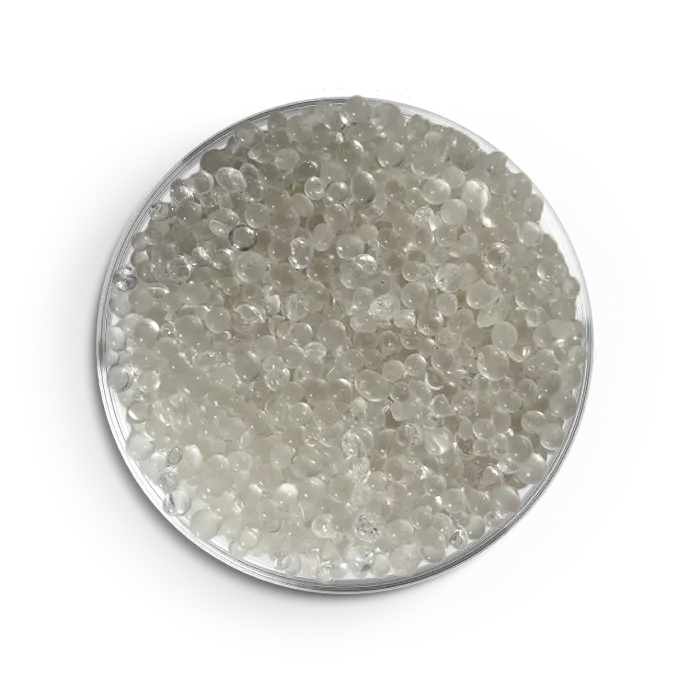
Desiccant – Pre-drying
PORESPHERE® AL-H
High-capacity SiO₂ granules (silica gel) used as a preliminary drying stage. Reliably removes water vapor from gas mixtures, protecting downstream catalysts, activated carbon, or molecular sieves.
Particle size: 3–5 mm beads
BET surface area: ≥ 729 m²/g
H₂O-capacity: ≥ 44% (at 80% RH)
Regeneration temp.: 140 °C
Dew point down to: –40 °C

Desiccant – Pre-drying under high moisture load
PORESPHERE® Makro-B
Wide-pore SiO₂ granules (silica gel) designed for the pre-drying of highly humid gas streams. Effectively removes large quantities of water vapor from gas mixtures, thereby protecting downstream catalysts, activated carbon, or molecular sieves.
Particle size: 3–5 mm beads
BET surface area: ≥ 800 m²/g
H₂O-capacity: ≥ 71% (at 90% RH)
Regeneration temp.: 140 °C

Desiccant – Protective layer for exposure to condensation
PORESPHERE® AL-W
SiO₂ granules (silica gel) with a high Al₂O₃ content, designed for protection against condensation. The material retains its structural integrity upon contact with liquid water and serves to protect downstream catalysts, activated carbon, or molecular sieves.
Particle size: 3–5 mm Kugeln
BET surface area: ≥ 540 m²/g
H₂O-capacity: ≥ 34% (at 80% RH)
Regeneration temp.: 140 °C
What happens without the right adsorbent?
Excessive H₂S content
In the presence of moisture, hydrogen sulfide forms highly corrosive sulfuric acid. Furthermore, it poisons catalysts in downstream processes and poses a health risk to humans.
Excessive H₂O content
Once moisture condenses, it can block pipelines and significantly increase the risk of corrosion within the system.
Excessive CO₂ content
Carbon dioxide dilutes the methane content in the gas, thereby significantly reducing its calorific value. Less CO₂ means more energy per cubic meter of gas.
Excessive O₂ content
When combined with methane, oxygen creates an ignitable gas mixture, posing an explosion hazard. It also promotes corrosion within the system.
Adsorbent selection based on process type.
Iron hydroxide | Activated carbon | Silica Gel | Molecular Sieve | |
|---|---|---|---|---|
Adsorbs | H₂S | H₂S, siloxanes, VOCs | H₂O | H₂O, CO₂, O₂, N₂ |
Sustainability | Single use product | Long lifespan | Regenerable | Regenerable |
Application | Biogas | Biogas | Biogas | Biomethane |
Our Recommendation
We recommend GIEBEL Cagesphere® 13X for the efficient production of biomethane. The 13X type ensures natural gas quality in compliance with current requirements.
In cases of high moisture load, we recommend using our PORESPHERE® Silica Gels in a dual-bed configuration for pre-drying or as a protective layer.