Molecular sieves. More than just desiccants.
Molecular sieves are indispensable in many industrial applications. Find out here about the important functions these small spheres perform.

What are molecular sieves?
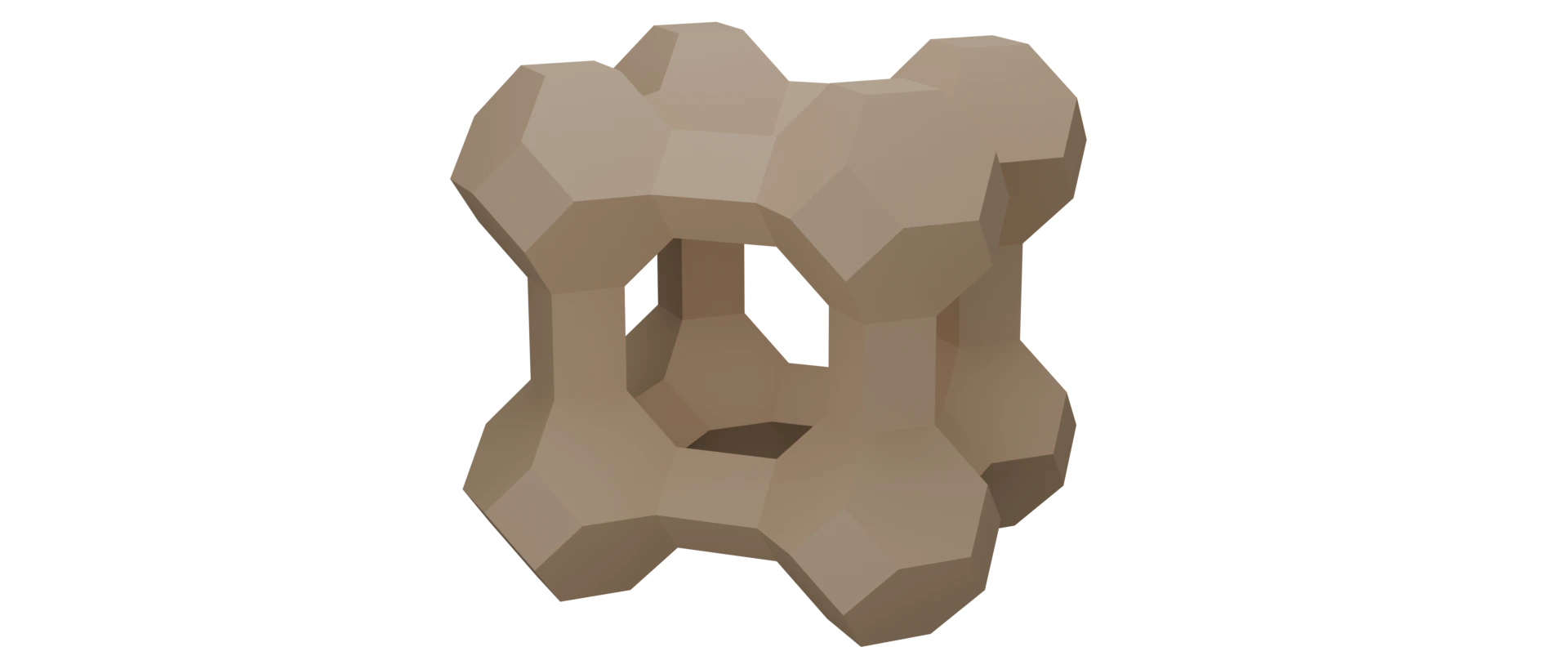
Molecular sieves are zeolites composed of crystalline aluminosilicates. They are formed when silicon dioxide and aluminum oxide create a three-dimensional crystal lattice of tetrahedra.
The name hints at their function: molecular sieves filter molecules just like a sieve. The crystal lattices form countless cavities that are accessible only through strictly defined pores. Molecules small enough to fit enter the cavities and are trapped, while larger molecules are excluded. This enables the selective separation of substances based on molecular size.
Air, gases, or solvents
Contain water vapor, CO₂, organic components, or other molecules that need to be removed.
Molecular sieve
Molecular sieves feature precisely defined pores and an enormously large, polar surface area. They physically attract and bind water and other molecules – entirely without the use of chemicals.
Substances are bound.
The molecules to be removed (e.g., moisture) remain bound to the surface of the granules and can be successfully retained or separated.
How are molecules taken up?
Adsorption
= physical interaction
Molecules accumulate in the pores on the surface, where they are held in place by physical interactions (physisorption).
Polar water molecules, in particular, form a temporary bond with the polar surface of the molecular sieves due to electrostatic attraction.

Molecular sieves capture molecules through the process of adsorption. Countless pores form on a surface area of up to 1,250 m² per gram of material – an area equivalent to nearly 5 tennis courts concentrated on a fingertip – where molecules can attach themselves. Polar molecules, in particular, are attracted to the zeolite surface by van der Waals forces and dipole interactions.
Since this is a physical process, it can be reversed by supplying (thermal) energy, allowing the molecular sieve to be reused.
Typical applications for molecular sieves.
Molecular sieves have a wide range of applications. As a reliable desiccant, they effectively protect sensitive equipment and products from significant moisture-related damage or ensure the effective separation of molecules in demanding adsorption processes.
Adsorption dryers
Adsorption dryers are frequently used when large industrial volumes of air or gas need to be dried.
The systems consist of two interconnected containers filled with desiccant to dry the gas/air mixture flowing through them.
Granule Dryers
Certain plastics, such as PET, actively absorb moisture.
To prevent moisture-related damage during further processing, the plastic granules must be thoroughly dried.
Biomethane Upgrading
To upgrade biogas to biomethane, strict purity requirements must be met.
This primarily involves the adsorption of residual moisture, carbon dioxide, and oxygen.
Advantages over other desiccants and adsorbents.
Molecular sieves are particularly suitable for three scenarios:
- Deep drying to remove moisture down to the ppm range
- Use at high ambient temperatures of up to 200°C
- Selective adsorption of specific substances
This means the focus shifts beyond mere moisture control as a desiccant to the adsorption of other molecules for targeted substance separation.
Property | Clay (Bentonite) | Calcium chloride | Silica gel | Molecular sieves | Activated alumina |
|---|---|---|---|---|---|
Use | Dehumidification | Dehumidification | Dehumidification | Selective adsorption, deep drying | Selective adsorption, robust properties, deep drying |
Moisture absorption | Moderate (~20%) | Very high (~200%) | High (~35%) | Moderate (~25%) | Moderate (~20%) |
Form during adsorption | Swells | Liquefies | Unchanged | Unchanged | Unchanged |
Reaction with other substances | Forms chemical compounds | Forms chemical compounds | Chemically inert | Chemically inert | Chemically inert |
Reusable | Regenerable | One-time use | Regenerable | Regenerable | Regenerable |
Water-resistant |
Choosing the right molecular sieve for your requirements.
Selectivity based on pore size
In molecular sieves, cations are deliberately incorporated into the molecular structure. Depending on the type, these extend into the pores to varying degrees, resulting in distinct yet precisely defined pore openings. Cations such as Li⁺, Na⁺, Ca⁺, and K⁺ are used for this purpose.
Molecular sieve | Cations | Pore size |
|---|---|---|
3A | Li⁺ | 3 Å |
4A | Na⁺ | 4 Å |
5A | Ca⁺ | 5 Å |
13X | K⁺ | 10 Å |
With these molecular sieves, you can adsorb the following substances:
Complete overview
Moisture Adsorption
Molecular sieves achieve very low residual moisture levels in the ppm range which are unattainable with other desiccants such as silica gel.
Type 3A is typically used for this purpose; it selectively adsorbs water molecules while generally leaving other substances unaffected.
For even more precise drying, Type 13X molecular sieve can be used. Thanks to its molecular cage structure and large pores, it binds water molecules even more aggressively and offers a higher overall capacity.
Grain Sizes
The size of the individual beads significantly influences the characteristics of the adsorbent.
Fine particles absorb molecules quickly but are more susceptible to damage under demanding process conditions.
Coarse particles absorb molecules more slowly but are significantly more stable – especially when exposed to high pressure.
Binders
These are used during manufacturing to give the beads a stable shape – acting much like a glue. They enhance the mechanical strength and service life of the zeolites.
Binder-free molecular sieves offer maximized adsorption performance because their entire surface area is available for molecule adsorption and is not obstructed by binders. However, they do sacrifice some dimensional stability as a result.