Wide or narrow pores – that is the difference with silica gel.
Different pore sizes result in different adsorption properties. Choose the right silica gel to suit your process requirements.

How is silica gel actually made?
It begins with a liquid that has an unusual name: "water glass" (sodium silicate). Essentially, this is sand that has been dissolved much like sugar in tea. An acid is then added, causing the liquid to solidify into a gel-like substance.
This gel is washed and subsequently dried. As it dries, the material contracts, creating countless tiny holes and channels throughout its interior. During the manufacturing process, the size of these holes can be precisely controlled, resulting in micro-, meso-, and macropores (small, medium, and large pores). These determine how effectively the silica gel can absorb water.
Ultimately, there are two main types: narrow-pore silica gel, which contains many small pores, and wide-pore silica gel, which features larger pores.
How does pore size affect adsorption properties?
Lots of surface area in a small space
Water molecules always attach themselves to the walls of the pores. The smaller the pores, the greater the total surface area that can fit inside. For this reason, narrow-pore silica gel with 650 – 800 m²/g offers significantly more surface area than wide-pore silica gel, which has 350 – 500 m²/g.
More surface area means more sites where water molecules can immediately anchor themselves. Narrow-pore silica gel is therefore lightning-fast, but because the pores are so small, it can hold less water overall – the "tank" is smaller.
Wide-pore silica gel, by contrast, has larger pores—providing more total space for water, but it takes longer to bind that water.
When water hides in a pore
There is a second effect: in very small pores, water vapor can turn into tiny water droplets even when the air’s humidity is low. The narrower the pore, the sooner this happens.
- In the case of narrow pores, a humidity level of just 10 – 20 % is enough for water droplets to form. Silica gel therefore begins adsorbing water early on, but it also reaches full capacity quickly.
- With wider pores, a humidity level of 50 – 70 % is required for this effect to occur. In return, however, the material can absorb a much larger amount of water all at once.
The right GIEBEL silica gel.
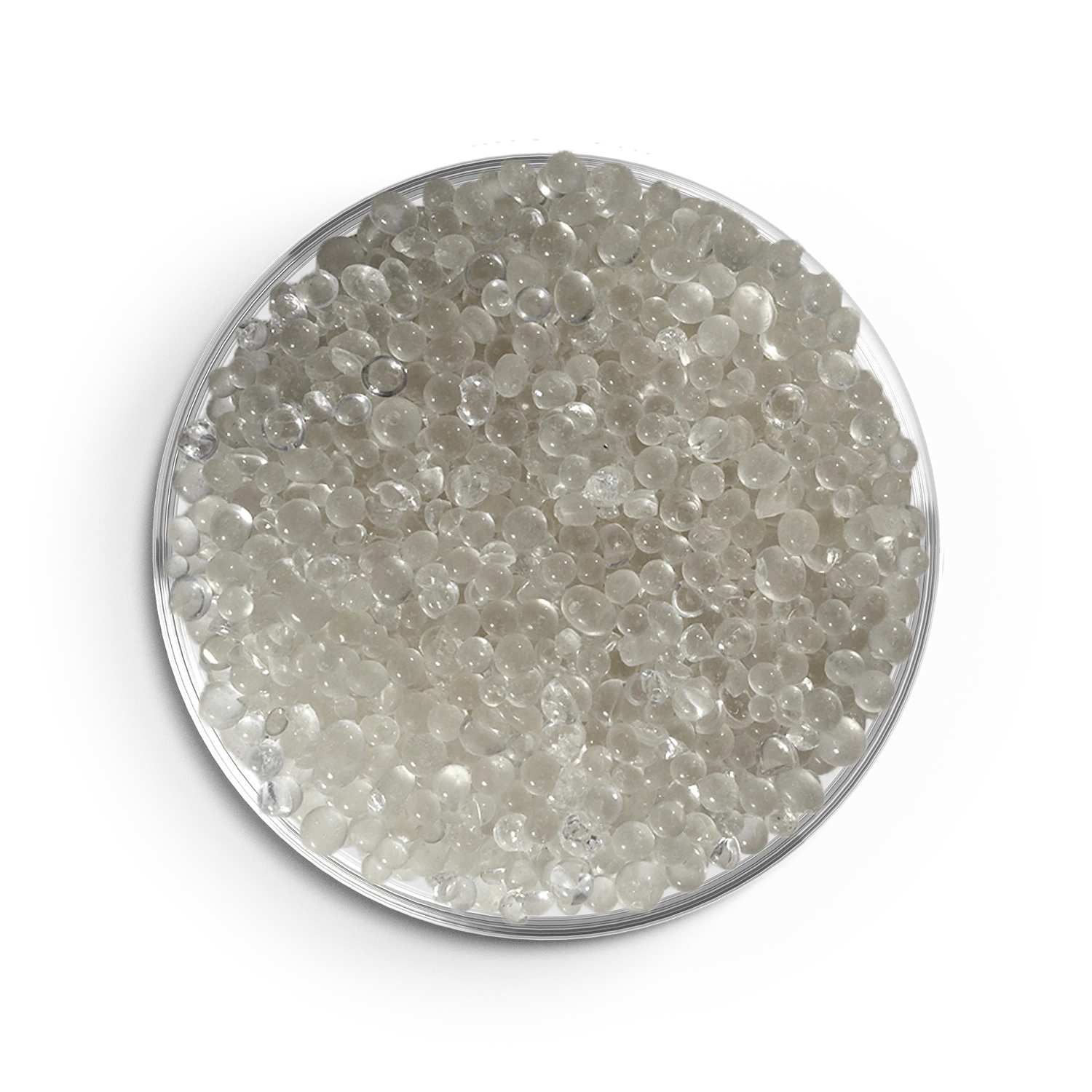
PORESPHERE® White
2–4 nm pore diameter
For environments with low to moderate humidity
Ensures a consistently low moisture level

PORESPHERE® Indikator-OG / -OF
2–4 nm pore diameter
For environments with low to moderate humidity
Ensures a consistently low moisture level
Includes a color indicator

PORESPHERE® Makro-B
6-12nm pore diameter
For environments with high humidity
Rapidly absorbs large amounts of water from humid air