Molecular sieve 4A in breathing air compressors.
Residual moisture in accordance with the DIN EN 12021 standard
Dew points down to -70°C
High-quality breathing air
No corrosion in cylinders and tanks
Breathing air compressors are used wherever people require a supply of portable breathing air. Filter cartridges filled with desiccants and activated carbon ensure that the breathing air meets the required quality standards.
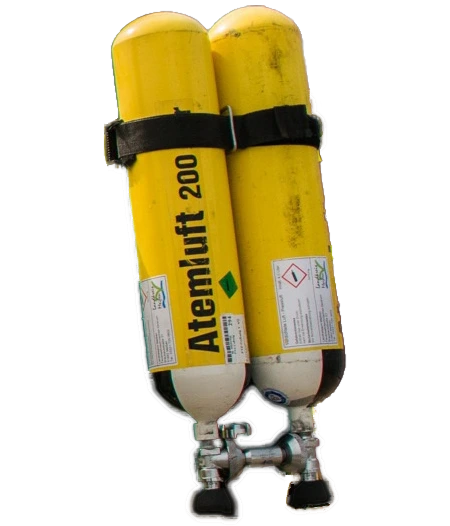
What is a breathing air compressor and how does it work?
A breathing air compressor is a system that draws in air, purifies it, and subsequently compresses it.
Once filled into cylinders, this provides breathing air for use in respiratory protective equipment.
While a standard compressor builds up a pressure of 7–14 bar, a breathing-air compressor reaches as much as 200–300 bar.
This allows large quantities of air to be compressed into the smallest possible (transport) space.
The air cylinders on the backs of firefighters?
These are the very things that were filled using a breathing-air compressor.
What requirements must the drying agent meet?
To ensure that breathable air is truly fit for breathing, there are established regulations, as set out in the DIN EN 12021 standard:
Parameter | Unit | Limit |
|---|---|---|
Oxygen (O₂) | % | 21 ±1 |
Carbon monoxide (CO) | ppm | 5 |
Carbon dioxide (CO₂) | ppm | 500 |
Oil | mg/m³ | 0,5 |
Water (H₂O) | mg/m³ | 25 |
To meet these limit values, filter cartridges are installed to treat the compressed air. Typically, these contain a layer of activated carbon and desiccant beads, and in some cases, catalysts.
The activated carbon filters out oil, odors, and carbon monoxide.
The catalyst provides additional oxidation of carbon monoxide.
The desiccant beads adsorb water and, to a certain extent, CO₂.
That is why dry breathing air is essential.
Failure to adhere to the humidity limits can have serious consequences for the end user:
Icing
If the air is too humid, it may freeze upon cooling as it flows out through the pressure reducer. This can cause the air supply to become completely blocked.
Bacteria & Mold
During extended periods of inactivity, excessive moisture can lead to the unwanted growth of bacteria and mold. If inhaled, these can enter the respiratory tract directly.
Corrosion
Over an extended period, moisture promotes corrosion of the material, thereby risking significant weakening of the material.
Molecular sieves 4A and 13X – for the highest quality standards.
These molecular sieves achieve a level of drying that allows for dew points as low as -70°C – making them ideal for breathing-air compressors. Unlike other desiccants, molecular sieves can withstand extremely high pressures of 200–300 bar while simultaneously achieving an exceptionally low level of residual moisture.
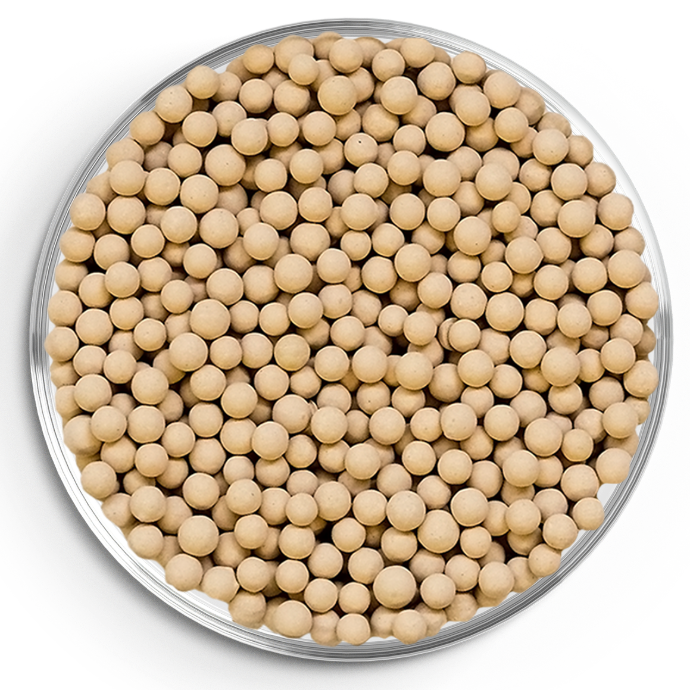
Molecular Sieve 4A
Perfect all-rounder for intensive drying
Fixed pore size of 4Å
Specific surface area of 500–1000 m²/g
Molecular Sieve 13X
Higher flow rates
Longer service lives
Fixed pore size of 10 Å
Specific surface area of 500–1000 m²/g
CO₂ co-adsorption*
In the case of very dry intake air, specific process conditions can lead to the co-adsorption of CO₂, resulting in an air composition that deviates from the requirements of DIN EN 12021.
Already know which product you need?
Need support choosing the right product or quantity?
FAQ - your questions, answered.
Yes, the molecular sieve can be regenerated by driving out the bound water. In practice, however, the filter cartridges used in breathing-air compressors are simply replaced after a certain period, as regeneration during operation is not feasible.
The service life is influenced by several environmental factors, such as temperature, relative humidity, flow rate, etc.
Molecular sieve 13X offers several advantages, such as a higher adsorption capacity and a strong polar attraction to water. At the same time, however, it can also adsorb larger quantities of CO₂ depending on the specific process conditions.
DIN EN 12021 stipulates a maximum CO₂ concentration of 500 ppm in breathing air. Since ambient air typically contains around 420 ppm of CO₂, this requirement is already met. Further removal of CO₂ from the air could lead to an uncontrolled alteration of the air's composition.
Under "normal" ambient conditions, molecular sieves preferentially adsorb H₂O, while CO₂ is either displaced or not adsorbed at all. However, if the intake air for a breathing air compressor is already very dry, there are fewer H₂O molecules present, leaving space available for CO₂.
In this specific scenario, if an excessive amount of CO₂ is adsorbed, the balance of the air mixture could shift in a way that deviates from the standard – though this remains unlikely.