Replace before it’s too late. Silica gel with color indicators.
Saturation level visible at a glance
Various options available
Heavy-metal-free – pH-based indicators
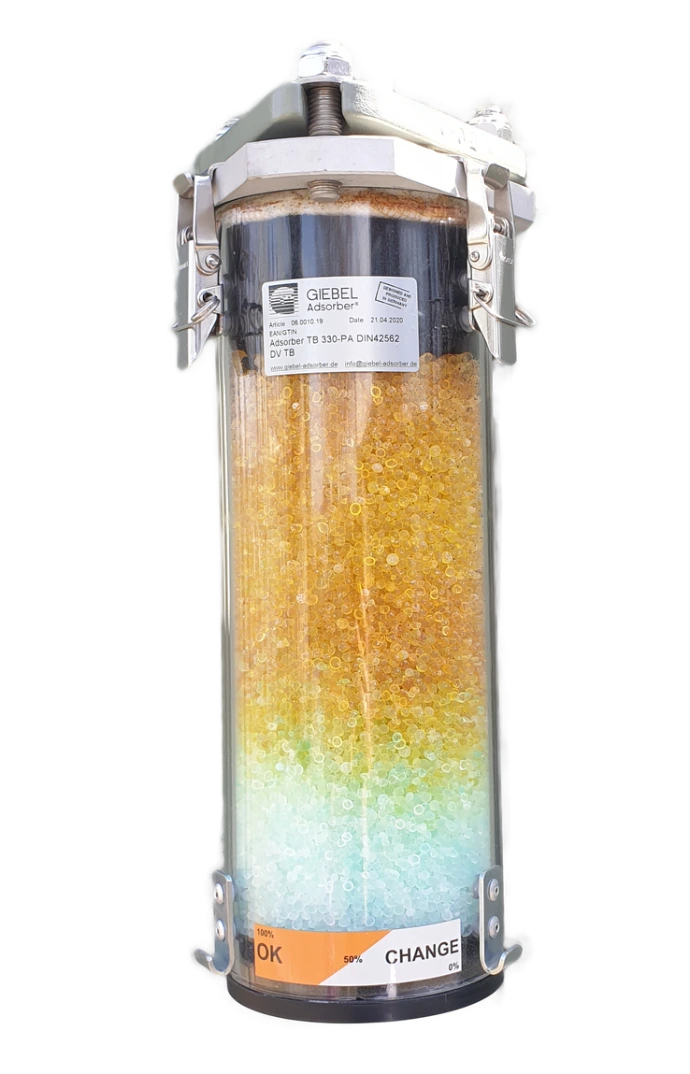
Prevent damage caused by delayed maintenance.
Silica gel is used in a wide range of applications—from air-drying systems in transformers and other industrial technical equipment to the drying of filaments for 3D printing. In these settings, the desiccant beads protect equipment and materials from serious damage caused by moisture.
To ensure reliable protection, the silica gel must be replaced regularly once it has become fully saturated with moisture.
Failure to perform timely maintenance leads to the unwanted ingress of moisture. Color indicators show exactly when this point has been reached, as the granules change color as their saturation level increases.


How does such a color indicator work?
The raw material used to produce silica gel beads is initially colorless – that is, white. To enable a color change, specific substances known as color indicators must be added to the material.
These substances are highly sensitive to changes in the pH level of their surroundings. As the silica gel absorbs water, the pH level inside the beads shifts, triggering a color change in the indicator substance.
This effect also works in reverse. For instance, when the silica gel is dried such as by heating, the pH balance shifts back and the indicator returns to its original color. This allows the beads to be reused repeatedly through a process known as regeneration.
Blue to Pink? Rather not!
Not all used indicators are good for you and for our environment. Especially, if you spot silica gel beads that turn from light blue to pink, be cautious. They probably contain a heavy metal – Cobalt(II) chloride.

Silica Gel Blue/Pink
Color Transition: Blue to Pink
Indicator used: Cobalt(II) chloride
Cobalt(II) chloride is classified as a class 9 dangerous good:
- carcinogenic
- toxic to reproduction
- acutely toxic
- hazardous to the aquatic environment
- hazardous to the environment
Substance of very high concern and a cause for alarm under the CLP Regulation (EC) No 1272/2008.
Our recommendation
Use only silica gel that does not contain heavy-metal-based indicators such as cobalt chloride – Do something good for yourself and the environment.
Variants of orange silica gel offer excellent properties as a direct replacement, without altering anything about your core process.
If you are located within the EU, always verify your supplier's REACH compliance. Safe goods = safe processes.
GIEBEL Silica Gels.
High contrast, easy to read
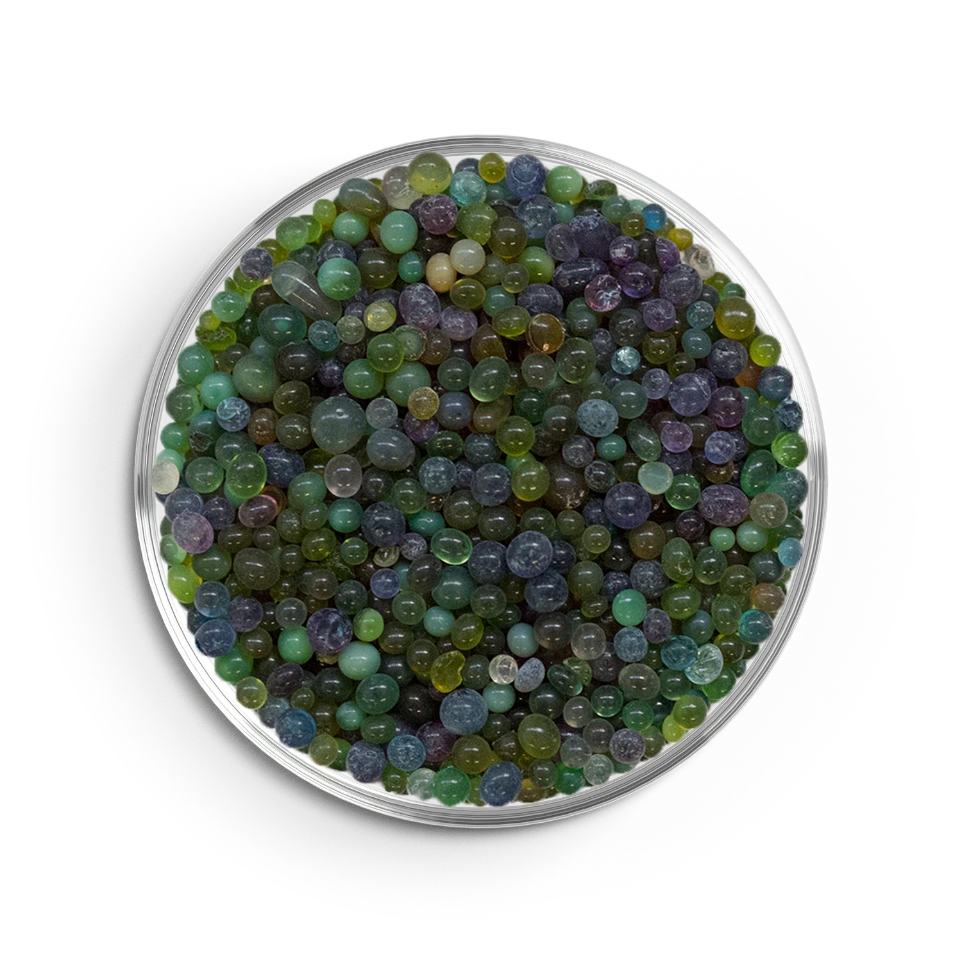
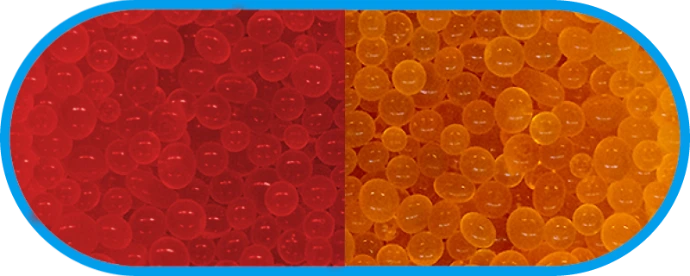
Color Change: Orange to Green
Color Transition: 10–20% loading
Indicator used:
Ideal for: Preventive maintenance

Long maintenance intervals
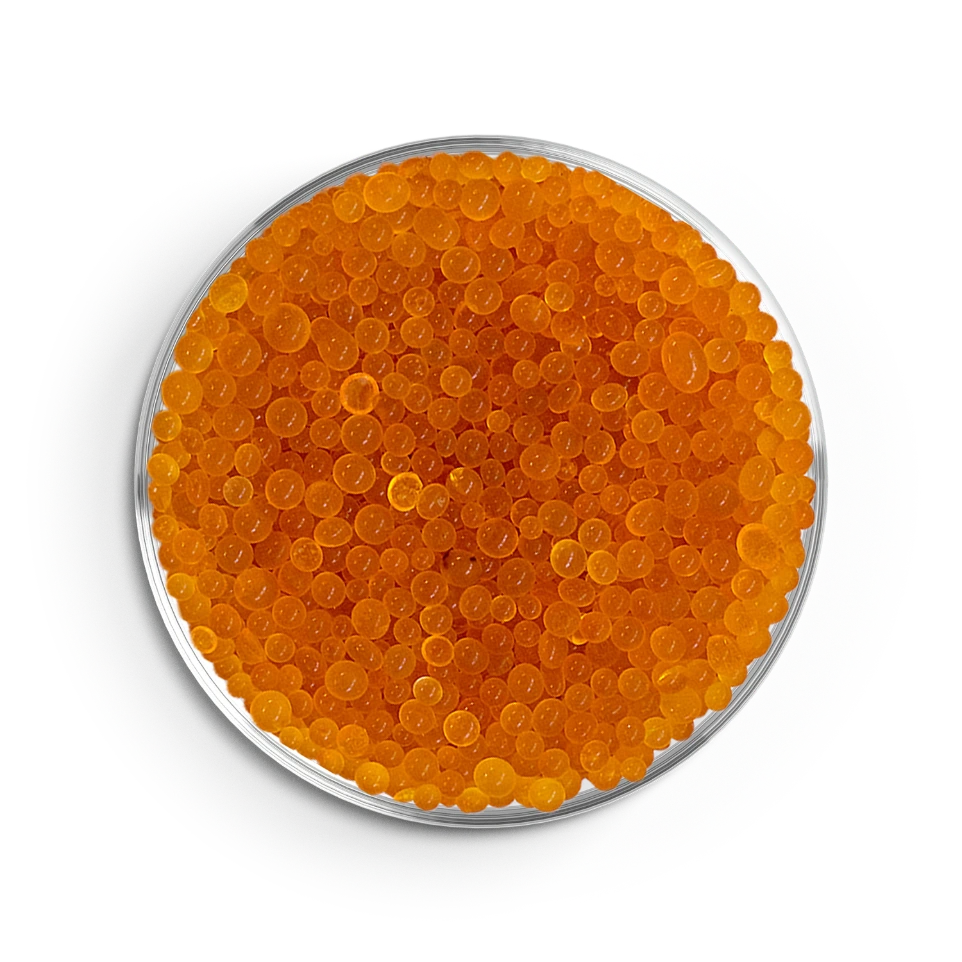
Color Change: Orange → Colorless
Color Transition: At 20–25% loading
Indicator used:
Ideal for: Extended service life
Alternative GIEBEL Silica Gels.
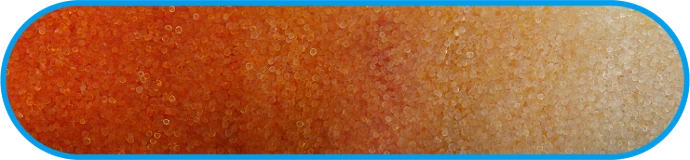
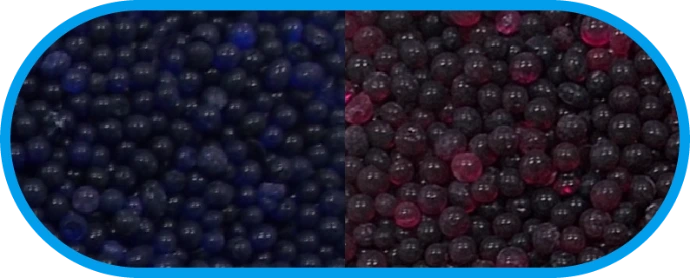
Alternative to Blue / Pink indicator
Color Change: Blue to Red
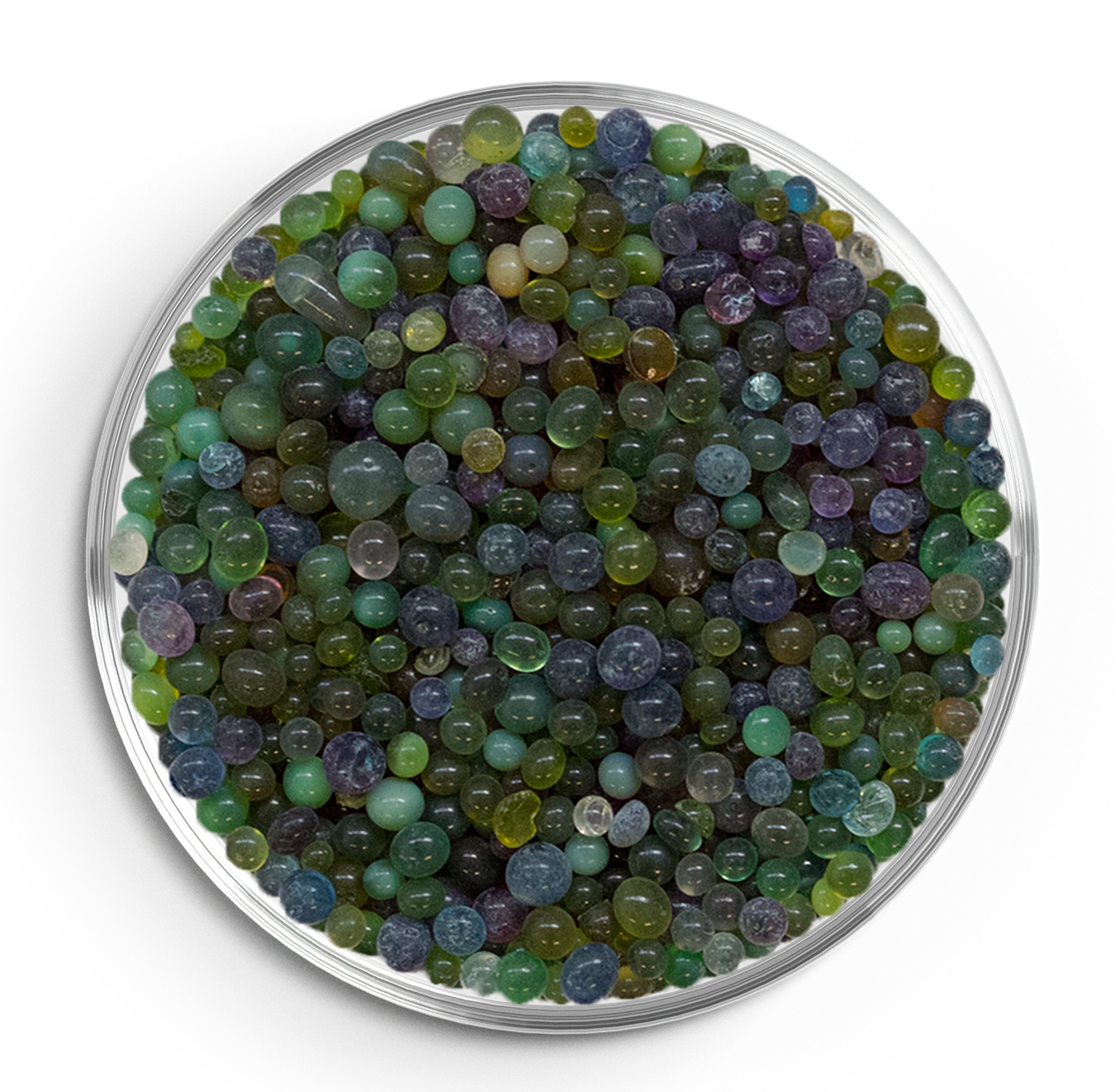
Regeneration
Once the desiccant beads are saturated with moisture and have completely changed color, they can no longer absorb any further moisture.
Heating them to 120°C releases the absorbed H₂O molecules from the granules. The color reverts to the original orange, and the silica gel can be reused as normal.
Already know which product you need?
Need support choosing the right product or quantity?
FAQ - your questions, answered.
No, strict regulations apply to applications in the food sector. For this purpose, we recommend our PORESPHERE® White in its completely pure form, without a color indicator.
At their core, they both consist of 99% SiO₂. Only their color changing behavior differs.
Orange - Green changes color at around 10 – 20 % saturation while showing great visual contrast.
Orange - Colorless changes color at around 20 – 25 %, guaranteeing longer service intervals.
Yes, silica gel with a color indicator can also be regenerated. However, the granules should not be heated at a temperature higher than 120 °C.