Silica gel in cyclic regeneration processes.
How to regenerate silica gel in industrial drying processes: desorption principle, timing, and regeneration methods.
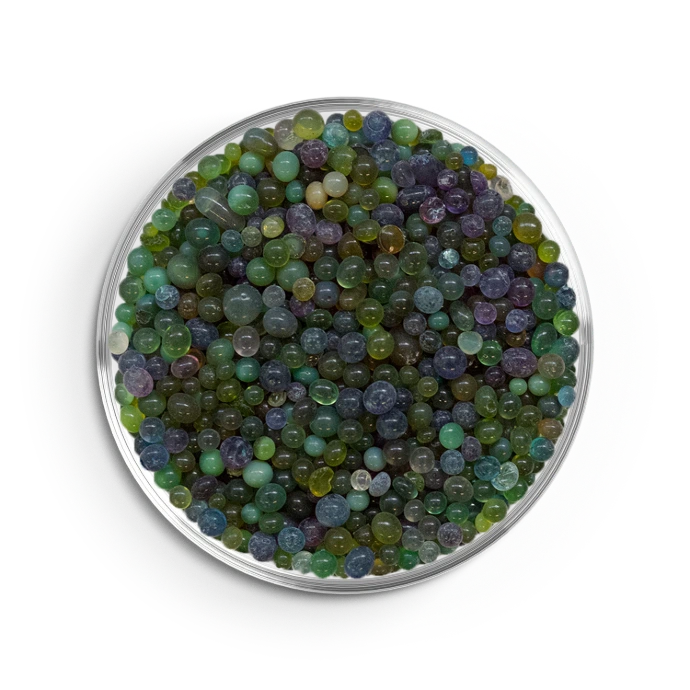
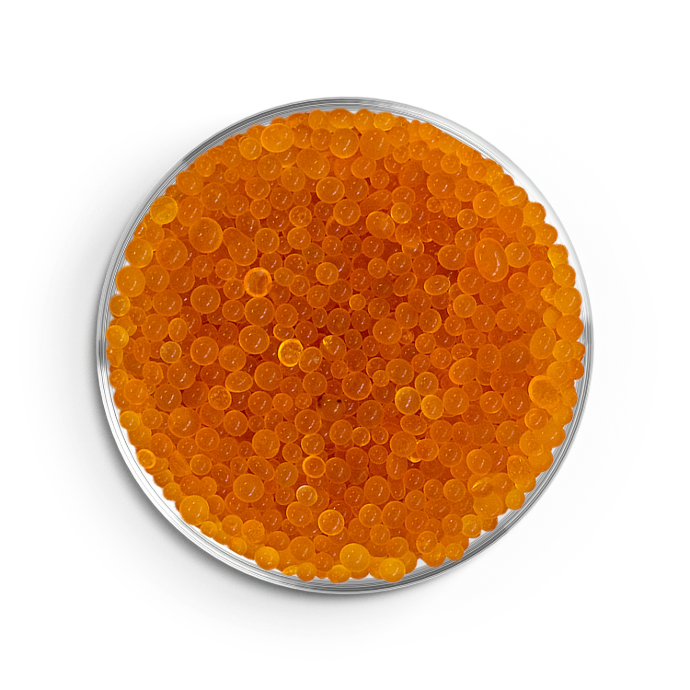
Silica gels bond to water is breakable.
A full bed of silica gel is not a used-up bed. The adsorbed water molecules only sit on the surface of the beads, held by hydrogen bonds. These bonds are weak enough to let go again.
Think of it like a magnet. At first, the connection holds tight. But once you pull hard enough, both sides come loose again. Silica gel behaves in a similar way.
Hot, dry gas gives the water molecules enough energy to break the hydrogen bonds and leave the pore walls. Lowering the ambient pressure has a similar effect.
Because no chemical reaction took place, the beads come out dry and unchanged, ready to take up water again. This is what makes cyclic drying possible: adsorb, regenerate, repeat.

When is regeneration due?
A desiccant bed never fills up with water all at once. Moisture loading creeps forward slowly. The beads at the inlet saturate first, and the zone where the drying happens slowly moves toward the outlet. The adsorption cycle should end when this zone reaches the end of the desiccant bed and moisture starts to slip through.
To identify this point we will need to know how much of the bed is already saturated. There are four different options.
Color indicator
With increasing saturation the color of the beads changes, providing a reliable signal. Only works with transparent housings or integrated viewing windows.
If the outlet dew point no longer reaches the required dew point, it is likely time for regeneration.
Pressure drop
Similar to dew point measurement, a drop in system pressure can also signal a saturated desiccant bed.
The desiccant filling is replaced cyclically based on empirical data and the expected moisture load.
How is silica gel regenerated?
Thermal regeneration
Heating silica gel to 120 – 140 °C is enough to break the hydrogen bonds and loosen the water molecules from the beads pores.
To achieve full regeneration, the entire packed bed must be heated uniformly right through to the core.
Usually, a stream of hot, dry gas is passed through the desiccant bed. It gives the water molecules the energy to leave the surface and carries them out of the container.
Pressure reduction
Regeneration does not neccessarily need heat – only less pressure.
On the bead surface, water molecules constantly leave and return. What tips the balance is how much water vapor is floating around the beads. Lower the total pressure, and the water vapor pressure drops with it, so fewer molecules return than leave.
Then, flushed with a little dry gas, the bed dries out.
Regeneration applied to industrial standards.
Thermal regeneration and pressure reduction describe two physical processes used to release water molecules from the pore surface of silica gel. In industrial applications, these principles are utilized to construct cyclic processes.
Are my beads dry enough?
Just as you can check when your desiccant needs to be regenerated, there are ways to determine whether the regeneration itself was successful or not.
If silica gel is only partially regenerated, this quickly manifests as shorter cycle intervals. Residual moisture remains in the granules, reducing the maximum capacity during the following adsorption cycle.
Color indicator
After successful regeneration, all desiccant beads must have returned to their original color.
After regeneration, a gas stream is passed through the silica gel bed which needs to reach the desired dew point.
Electronic humidity sensors can measure rising and sinking humidity levels in closed systems – indicating if the beads are dry enough.
Setpoint comparison
Many systems rely on fixed cycle times with standardized reference values. If the planned service life is not achieved, this indicates ineffective regeneration.
Can silica gel be reused endlessly?
Silica gel can be regenerated many times, but not endlessly. In one test, a narrow-pore grade went through 534 regeneration cycles. Its inner surface shrank from 700 to 340 m²/g, and its maximum water load fell from about 35% to about 25% of its own weight.
The beads adsorb exactly as before, they just have less room. Each cycle wears the pore structure a little, and how fast this happens depends on the operating conditions: regeneration temperature, gas composition, mechanical load, contaminations etc. – all these factors can positively or negatively influence the silica gels lifetime.
In the test, the decline slowed down, and beyond 500 cycles no significant further loss was measured. With proper regeneration, several hundred cycles are therefore a realistic expectation before the beads need to be replaced completey.
Already know which product you need?
Need support choosing the right product or quantity?
FAQ - your questions, answered.
Yes, you can regenerate smaller amounts of silica gel at home as well.
- Heat your oven to 140 °C (maximum 120 °C for color indicating silica gel)
- Spread the beads out across a baking sheet
- Bake for 1–2 hours
- Let the beads cool down and fill them into an airtight container